BLOG
World Expositions: Architecture from the Crystal Palace to 1960
The birth of world expositions also marks the beginning of the creation of new structures and buildings that change the city’s image, transforming it into a new ephemeral and magical place. The structures installed for the exposition, which are dismantled at the end of the event, have extravagant and unique forms and are the result of the work of architects, designers, and engineers.
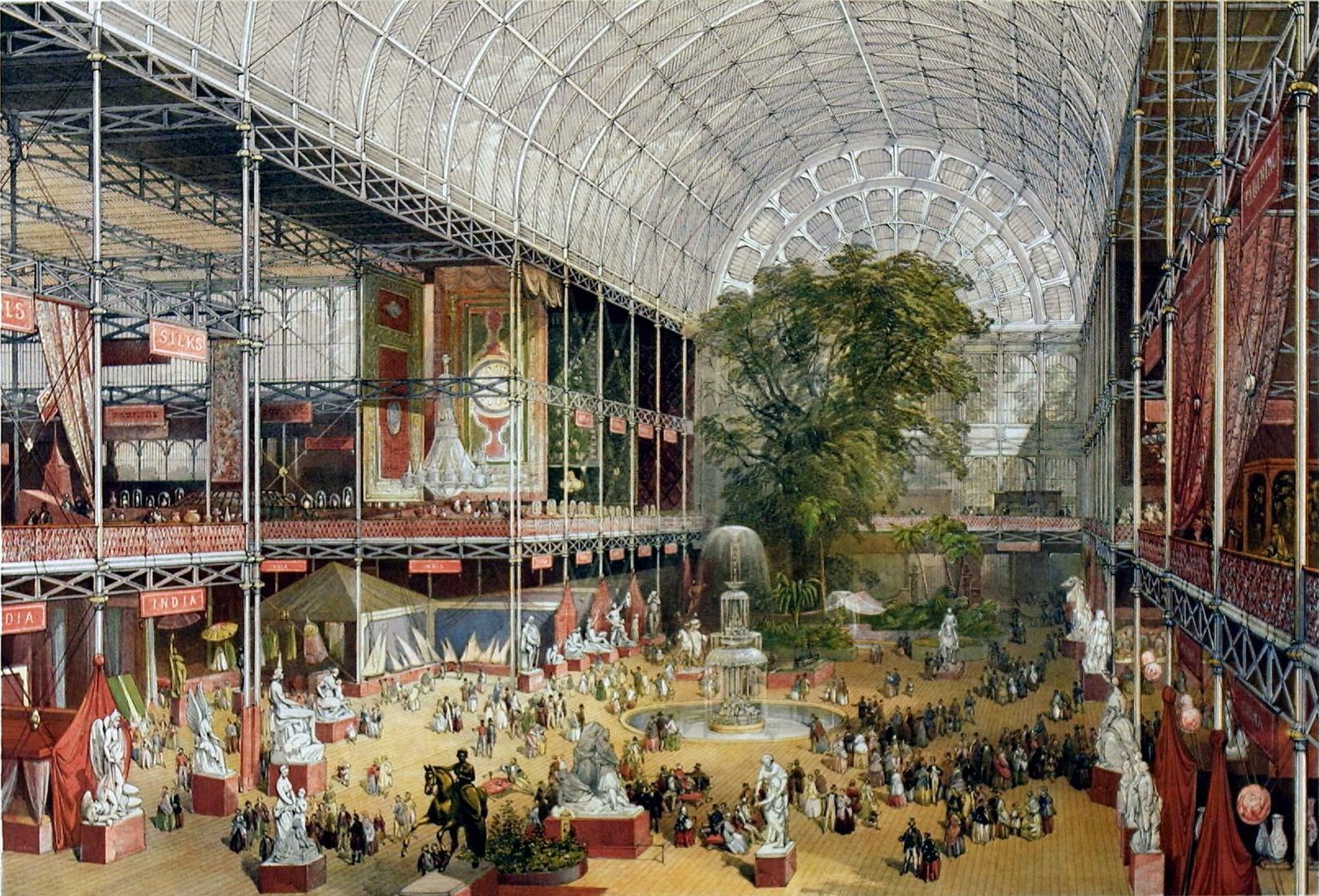
Many of these have become part of the collective imagination, and others are still present in our cities, becoming distinctive elements and true icons.
The first London exposition in 1851 was a success for exhibitors and the public and a great opportunity for visibility and prestige. The venue was the Crystal Palace, the work of architect Joseph Paxton: an enormous structure made of iron and glass that covered an area of 84,000 square meters in Hyde Park, a true celebration of new technologies and construction systems. Iron, previously used as an accessory element in structures, was widely used here due to its low cost.
The subsequent expositions
After the 1851 event, in 1855 France hosted the Universal Exposition of Agricultural, Industrial, and Fine Arts Products. The novelty of this edition was the section dedicated to art, featuring painters such as Eugène Delacroix, Dominique Ingres, and Camille Corot. The exposition was held inside the Palace of Industry, the Machine Gallery, and the Palace of Fine Arts.
The expositions become important moments in the life of capitals, giving architects and designers the opportunity to create unique architectures and decorations.
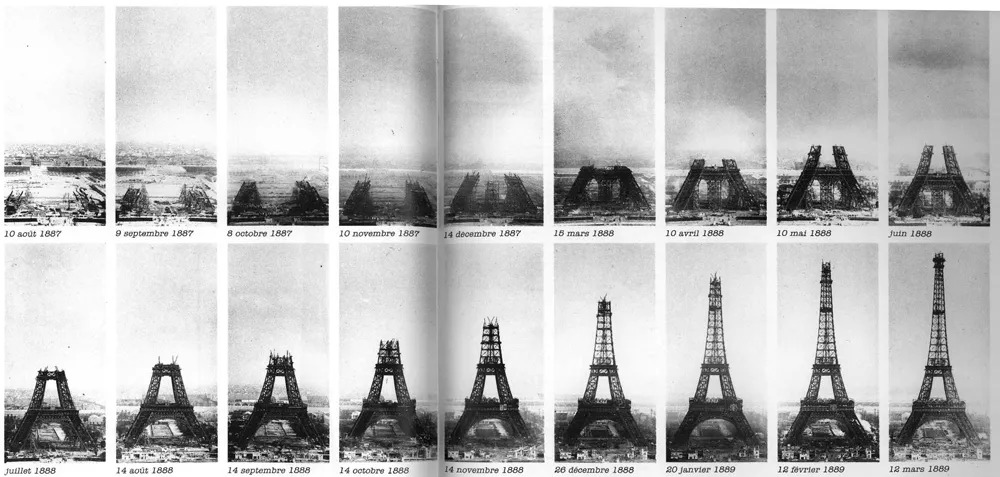
The 1889 Universal Exposition once again saw Paris as the protagonist, on the occasion of the centenary of the French Revolution. During this event, the Eiffel Tower was built, becoming an icon of Paris and France. A monumental work completed in over two years, 324 meters high, weighing 8,000 tons, it was supposed to remain for 20 years but later became a symbol of the city’s growth and technological development and is now one of the most visited monuments in France and worldwide.
In 1906, the venue for the Universal Exposition was Milan to celebrate the opening of the Simplon transalpine tunnel.
During this occasion, the Civic Aquarium of Milan was built, the third oldest aquarium in Europe, located in the current area of Parco Sempione: designed by architect Sebastiano Locati, it is considered one of the most valuable and significant buildings of Milanese Art Nouveau.
The exposition held in Milan from April 28 to early November was also hosted in pavilions around the Castello Sforzesco and in the Piazza d’Armi area. Over 12 million old Lire were spent for the exposition, with 35,000 exhibitors, many of whom were foreign, and 5.5 million visitors.
Dated 1942 is the construction of the E.U.R. district in Rome. The origin of the district is linked to the project of a Universal Exposition that was to be held in 1942. The first phase in view of the event was the choice of the area to build, and the area of Tre Fontane was chosen. The project was imposing, as it involved the expansion of the city and was entrusted to architects Pagano, Piacentini, Piccinato, Rossi, and Vietti.
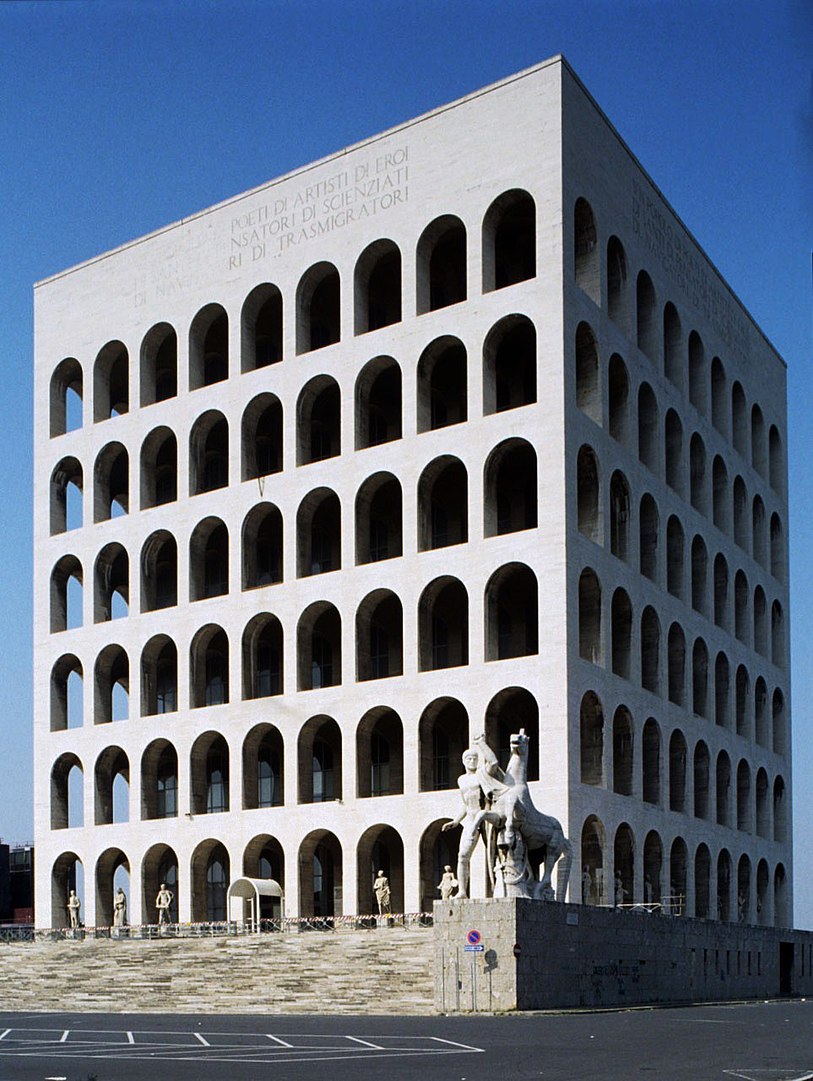
The idea was to build a city of the future, combining modernity and classical Roman Empire architecture, with large spaces and monumental buildings. The 1942 Exposition due to the war never took place, but the buildings designed by Piacentini remain, including the Palazzo della Civiltà Italiana, Piazza Imperiale, and the Palazzo dei Ricevimenti e dei Congressi.
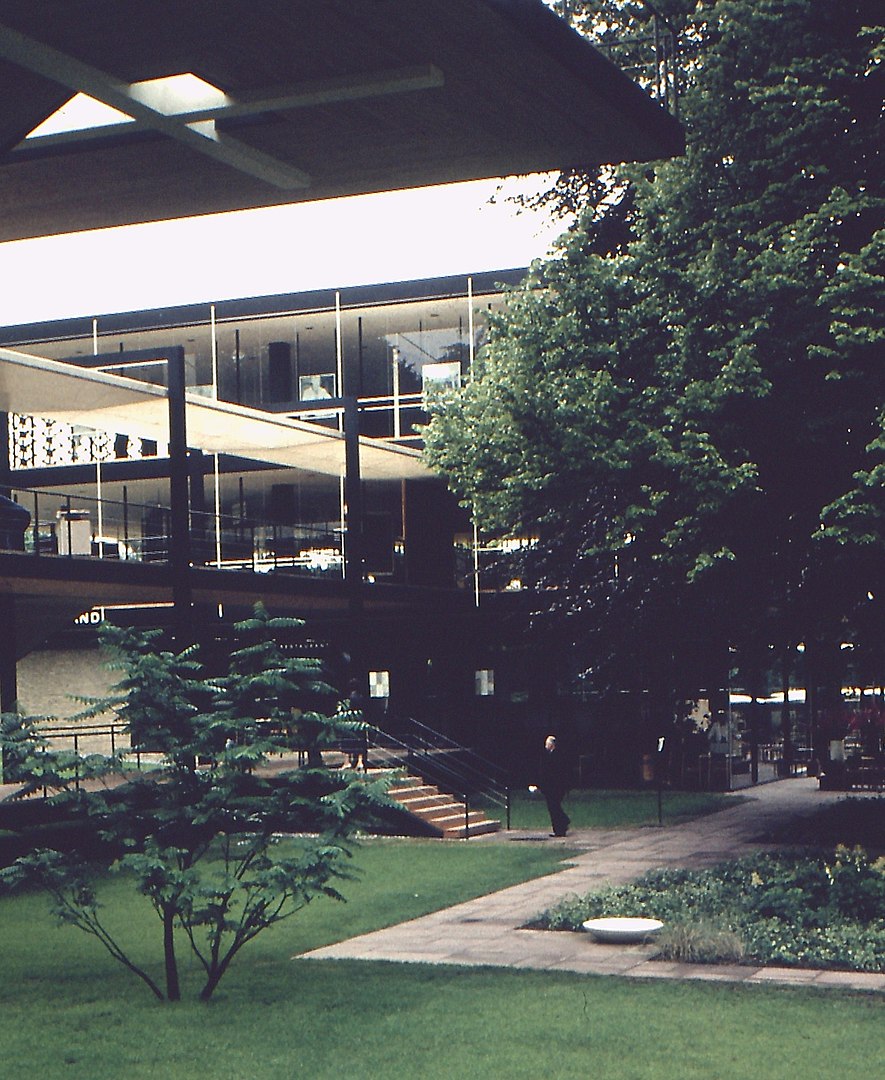
In 1958, the Universal Exposition was held in Brussels, where for the occasion the Atomium was built, the imposing monument constructed in steel representing the nine atoms of an iron crystal magnified 165 billion times.
The building, designed by architect André Waterkeyn, is 102 meters high, the spheres have a diameter of 18 meters and are connected by escalators; it was supposed to remain for only 6 months but was a great success and still hosts exhibitions and shows today.