BLOG
When you should stop decorating and finally enjoy your home
Have you ever felt that, even though everything seems almost in place, something in your room still urges you to move a vase, change a print, or find that missing detail?
You are not alone. It is a common feeling, and it’s no coincidence that one of the most frequently asked questions in the world of interior design is precisely this: when can I say that my room is truly finished?
In reality, there is no universal rule: the concept of “finished” varies from person to person, from home to home. Yet, there are some fairly clear signals that indicate that a space has reached a point of genuine, functional, and visual balance.
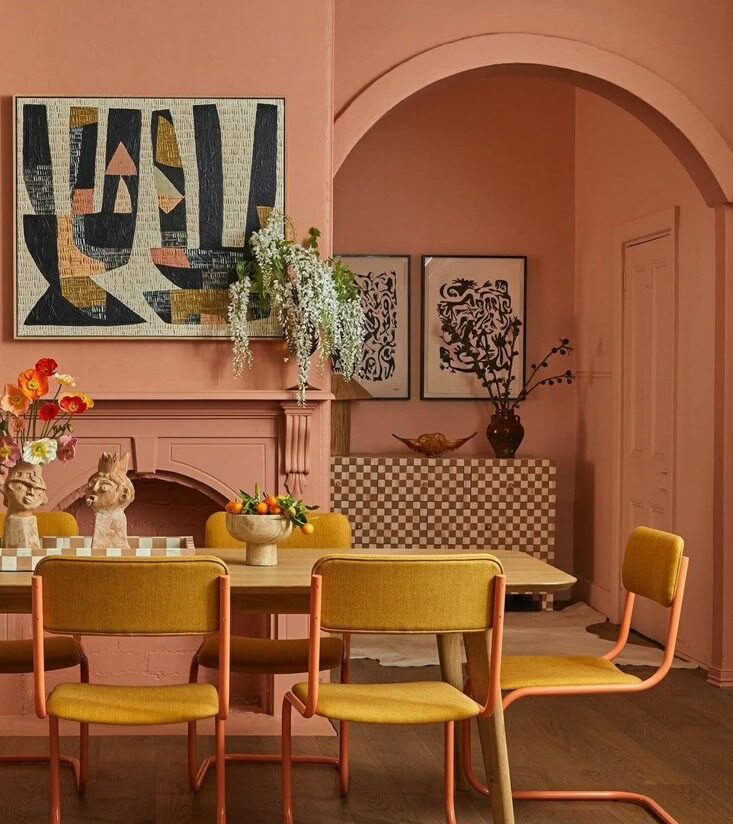
A room is finished when…
- it has a thoughtful and coherent structure: every choice — from colors to materials, from curtains to lighting — follows a logical thread, even if not always evident at first glance. It is the balance between elements that makes the difference: not everything has to match perfectly, but everything must have a reason to be there. Even emptiness counts: the space you leave free is as important as the space you fill.
A useful trick: look at the room in black and white photos — if it works without color, it means the formal and spatial balance is already solid. - it works in everyday life: aesthetics are not enough. A finished room is also practical: objects are in the right place, functions occur naturally, and the space supports you — it does not hinder you. It is like a tailored suit: it does not squeeze you, it does not limit you, it accompanies you without being noticed.
Ask yourself: can I live in it without having to move or “fix” anything every day? If the answer is yes, you are probably almost there. - it tells who you are: true design is personal. A finished room is a space that speaks about you without needing explanations. The details — a photo, an inherited lamp, an object found on a trip — build a narrative that makes the space authentic and alive. Style, after all, is nothing but the sum of your tastes, your habits, your memories.
Do not fear “imperfection”: often it is the asymmetries that tell the best stories. - it exudes calm and harmony, even in variety: it does not need to be minimalist or impeccable. It can be full, lively, even a bit messy. But if, upon entering, you feel that everything “breathes” and balances — that every curve, every shape, every distance is there for a reason — then that room works. It is finished not because it is perfect, but because there is nothing that clashes, nothing that asks to be fixed.
Trust your body: if it feels natural to stop, sit, stay… you are in the right place. - you no longer feel the need to add: this is perhaps the most revealing sign. When you stop looking for more, when you simply start enjoying the space as it is, it means you have reached a point of fullness. At that point, you can stop. At least for a while.
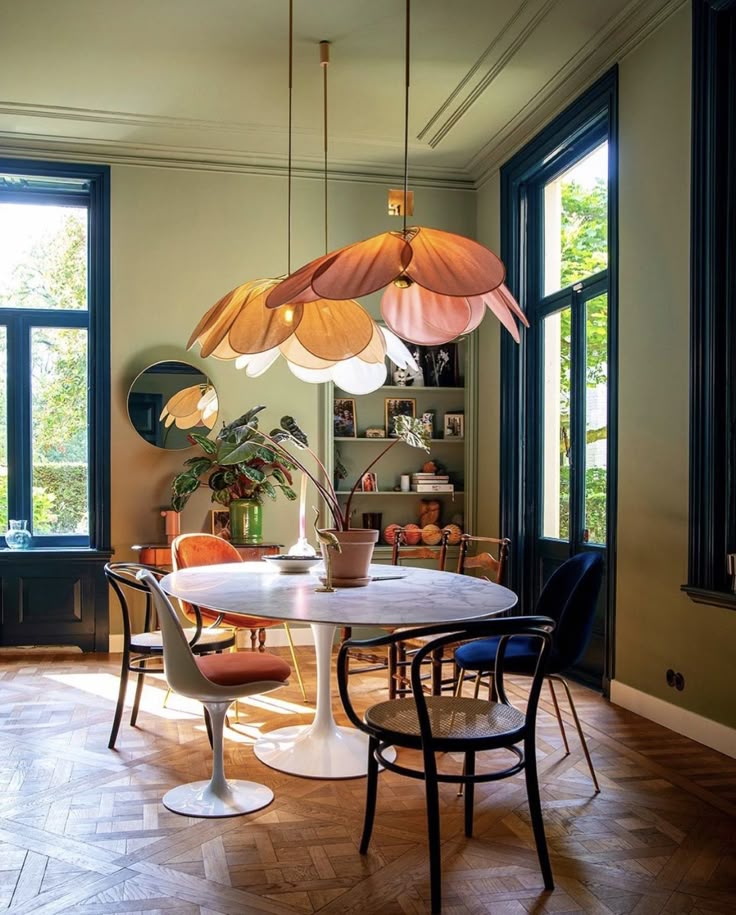
Finished does not mean immobile
A room can evolve with you, change over time, adapt to new phases of life. But there is a moment when everything is in its place and nothing asks to be changed. That, simply, is the moment when a room is truly yours. And it is truly finished.
And in the end, the luxury of “doing nothing” is an act of design. Observing, living, savoring the space is part of the process.
Photo credits: Pinterest