BLOG
Villa Waddell in Fiesole
Theodore Waddell arrived in Italy around the mid-sixties, where he graduated in Architecture in Florence in 1968.
For several years, he practiced as an architect and designer in Italy, collaborating with leading furniture companies. During those years, he built what probably remains his most important architectural work, which could have launched him, rightfully, into the firmament of world architecture stars: his house amidst the greenery of the Fiesole hills.
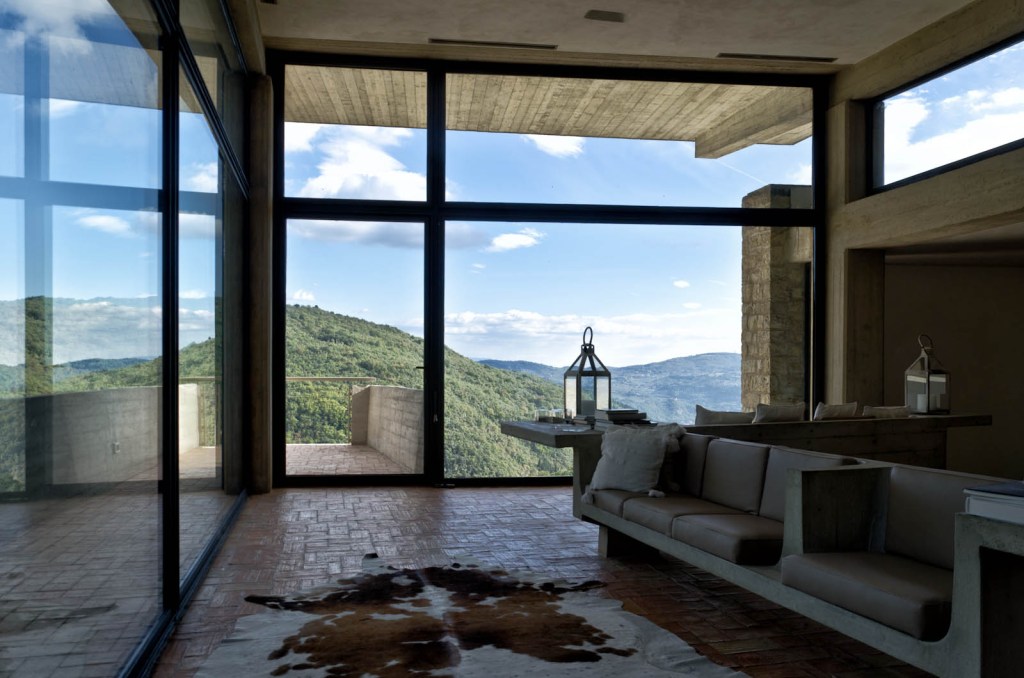
View of the main living room of Villa Waddell in Fiesole
But then something happens, something that remains shrouded in mystery.
This brilliant architect, later capable of having his design works, particularly lamps, exhibited in the permanent collection of the MOMA in New York, after the construction of this incredible villa, decides to return to the United States, where he will teach at university for his entire life, continuing his career as a brilliant designer, but abandoning architecture as his primary activity.
The period in which the villa was built is the era of organic architecture, a movement that aims for maximum harmony between nature and the environment designed and constructed by humans.
Frank Lloyd Wright theorized the movement, building the Fallingwater House and other remarkable examples of organic architecture.
In Italy, Giovanni Michelucci, Leonardo Ricci, and others explored and experimented with the themes of organic architecture, constructing villas on the Florentine hills in reinforced concrete and glass, expressions of modern technologies, in combination with exposed stone, reminiscent of the great tradition of Tuscan farmhouses.
Theodore Waddell, certainly in contact with this environment, built his house near Fiesole.
The in-depth study of every detail of the villa, in relation to the morphology of the place, gives rise to a unique construction, certainly superior to the Florentine masters who tackled the same themes.
But for some reason, Waddell left Italy after a few years, his splendid villa on the Fiesole hills, and his dreams, and this remains his only architectural expression.
After his departure, the villa changed hands several times until it was purchased by Eng. Andrea Ugolini, a Florentine designer who loves details, natural materials, and focuses on the restoration of the existing, in combination with the most modern and sophisticated contemporary technologies.
Understanding the magic and value of this building, he undertakes a rigorous restoration, seeking to improve everything possible, but respecting the concepts of organic architecture with which it was conceived, he limits his interventions to everything that is hidden, as what is visible seems perfect as it is.
In the end, the systems, the insulation (already avant-garde for a building almost 50 years old), and the minute finishes are the subject of the restoration.
The final result is magnificent and brings us back to the initial question. Why did Theodore Waddell, who certainly envisioned an Italian future, having invested work, energy, money, and dreams in the construction of such an ambitious building, leave Italy shortly after its completion?
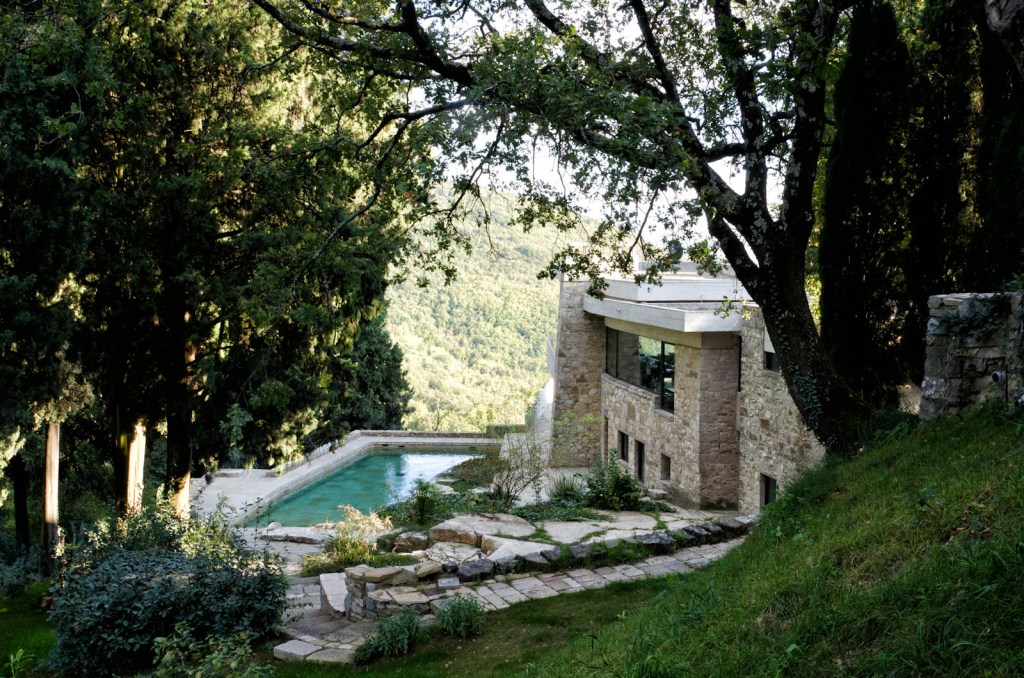
View of the villa and the stone pool
The villa is situated on a steep slope, on a rugged hill immersed in the woods.
The pre-existing elements and the dominant form of nature in that place guide the project.
A stone wall bastion, perhaps an ancient fortification, perched on the hillside, becomes the base on which the building rests.
But the building and its designer dare, placing the construction astride this bastion, partly resting on the slope of the hill, and partly cantilevered over the void beneath it.
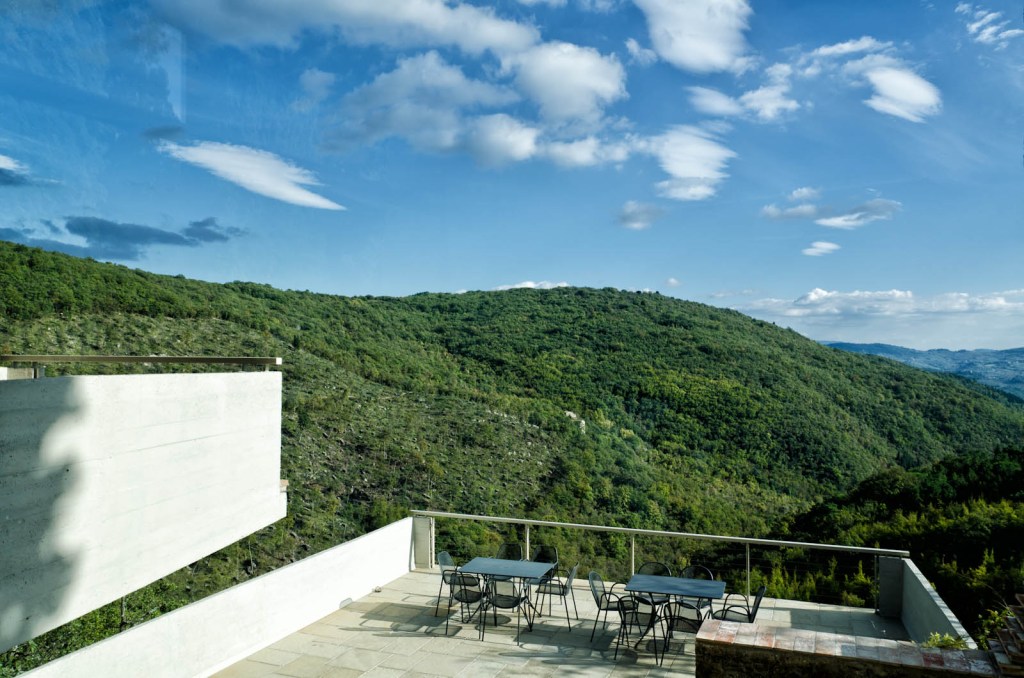
The terraces projecting over the valley
Approaching from the mountain, you see the roof of the villa extending into the void. The roof becomes the first facade of the building.
Through a small staircase, you access the villa through a small door. A subsequent entrance reveals a sequence of spaces that culminate in the terraces projecting over the valley below.
The large windows allow nature to enter the house. The reflections on the glass multiply the effect. The trees, the hills, the sky become part of the house.
Cuts in the floors and double volumes make the discovery of the architectural space more complex and intriguing.
The materials are bare: exposed concrete, stone, handmade terracotta, trees, sky.
It becomes very difficult to add anything, as the space is perfect and self-sufficient.
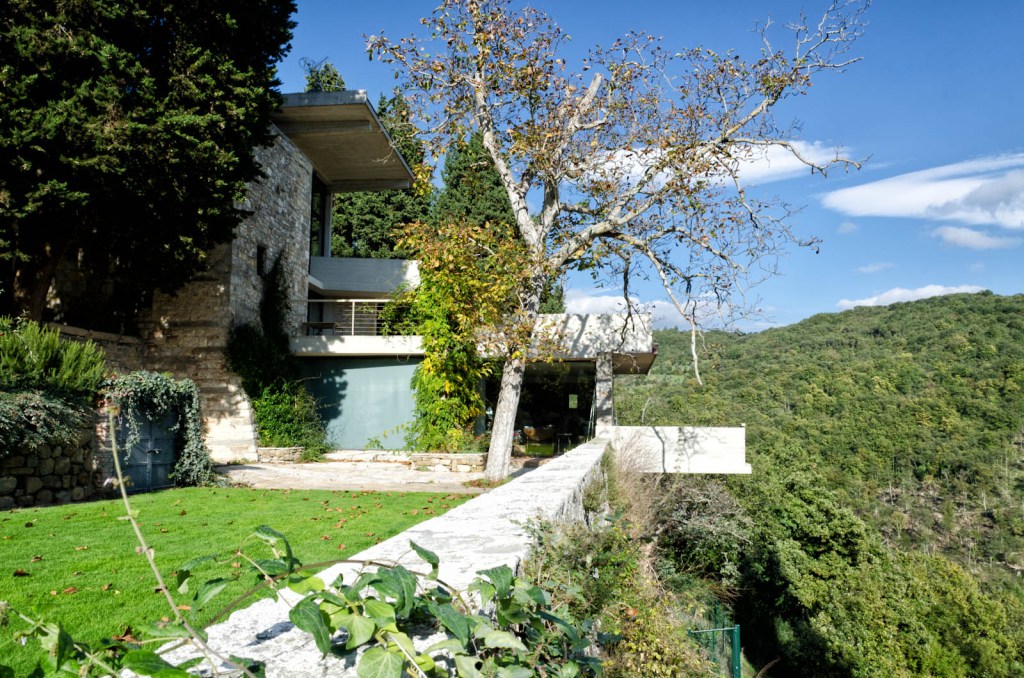
The villa projects with its terraces over the valley below
And then the terraces. At the end of the path, open over the valley below.
In one of the few areas where Andrea Ugolini intervened, the bathrooms, the choice was made to use Pietra di Rapolano, a natural material, typically Tuscan, capable of giving character, yet at the same time finding the right space in such a splendidly designed environment.
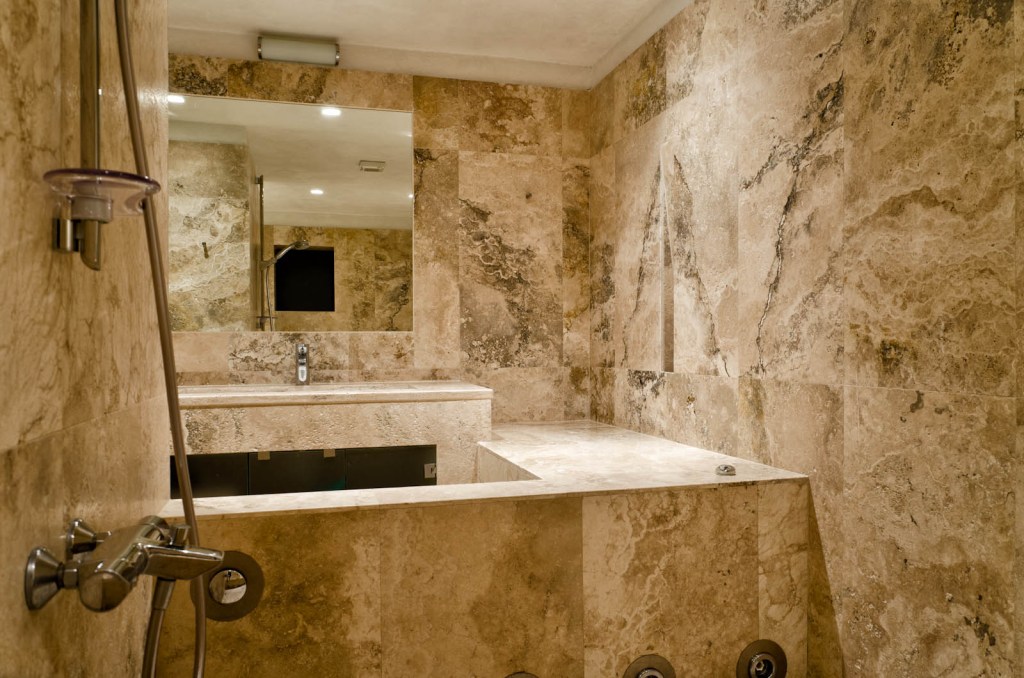
Master bathroom in Pietra di Rapolano, color Pdr 013
Even in the exteriors, the solids and voids, the transparencies (and reflections) of the glass, the heaviness of the exposed stone and reinforced concrete, dialogue in perfect harmony with the sky and the trees.
The pool is a mountain lake, with its stone bottom creating magnificent reflections and plays of light.
The flowerbeds, intentionally, do not restrain the plants, which are left free to expand.
Nature is part of the architecture. Nature is this marvelous, hidden treasure left embedded in the hill of Fiesole by a great Master of architecture, Theodore Waddell.
Architectural project: Theodore Waddell
Restoration project of 2013: Eng. Andrea Ugolini
Construction company: Faesulae srl
Supply of stone materials: Pietre di Rapolano
Photographs and texts: Arch. Lorenzo A. Polvani