BLOG
Vein-cut or cross-cut travertine
When discussing travertine, you often hear about “vein-cut” or “cross-cut”.
These are two methods used to cut the blocks, resulting in two completely different types of material, even though they come from the same block.
This is a block of travertine.
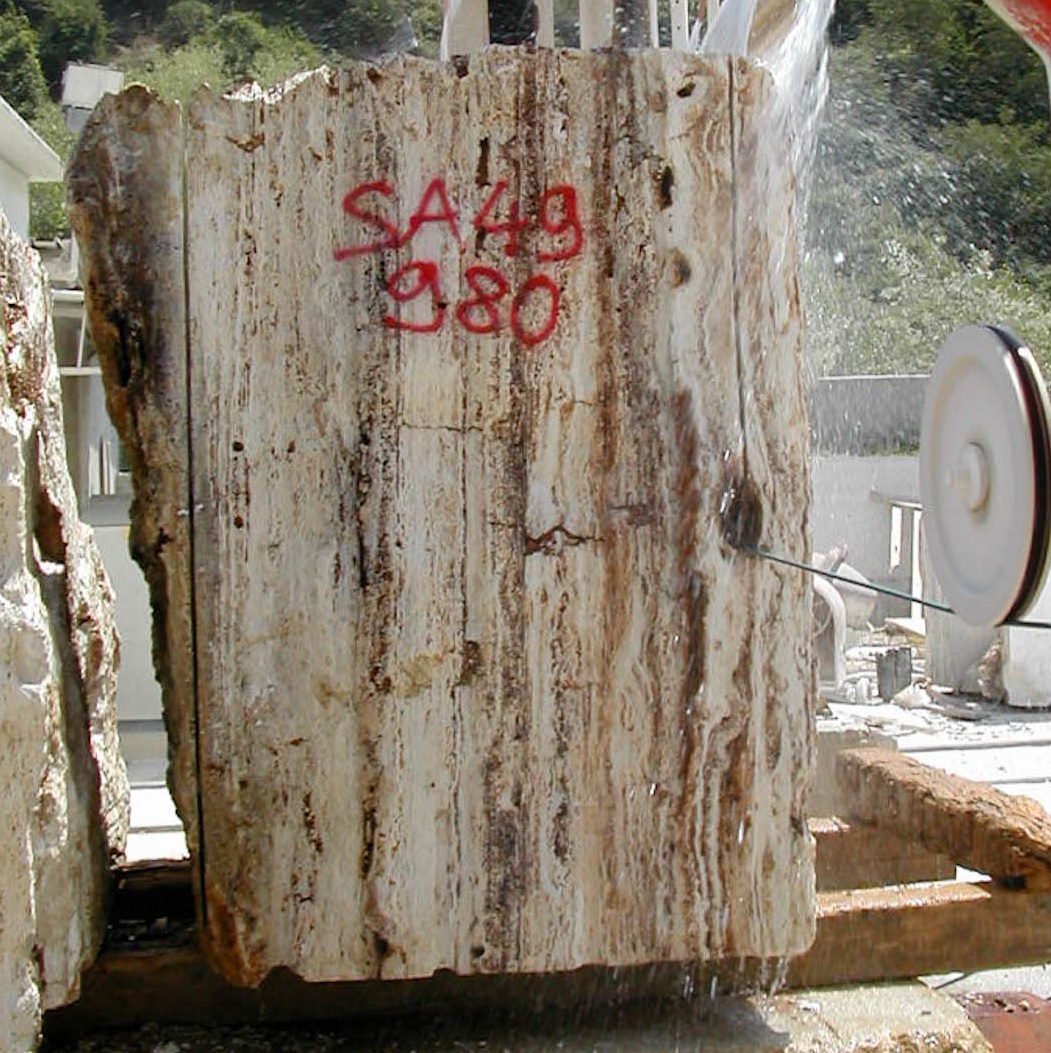
Immediately, you notice the stratifications: travertine forms through limestone deposits that layer upon each other over the course of geological eras. These stratifications give travertine its direction.
See the diagram below for the cutting possibilities of this block:
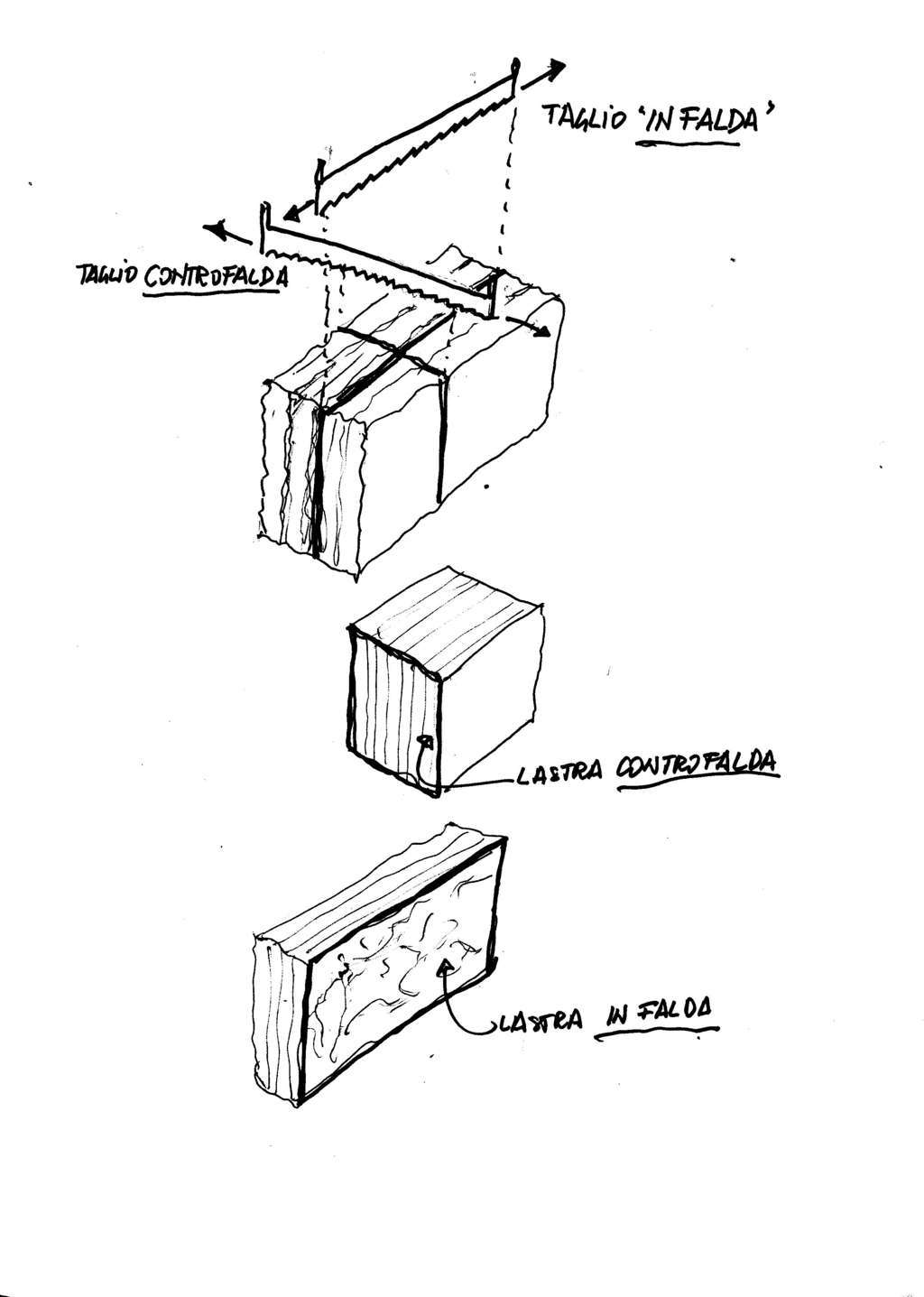
Historically, travertine has always been cut cross-cut. This method produces slabs (or tiles) where the striations form lines, sometimes distinct.
This is a “cross-cut” slab:
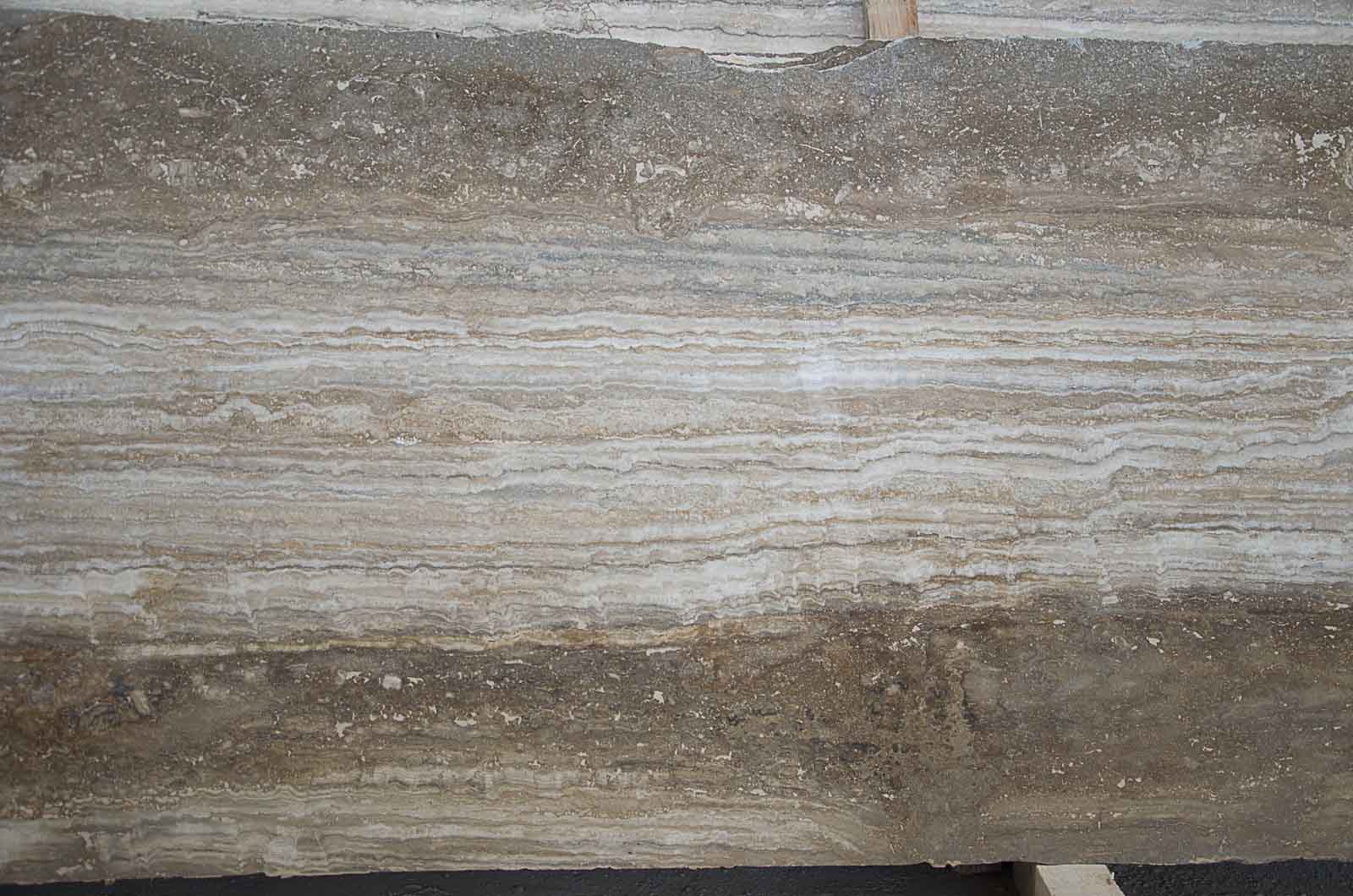
The veins are very prominent.
In the case where you decide to cut the block vein-cut, instead of veins, the “clouds”.
This is a “vein-cut” slab
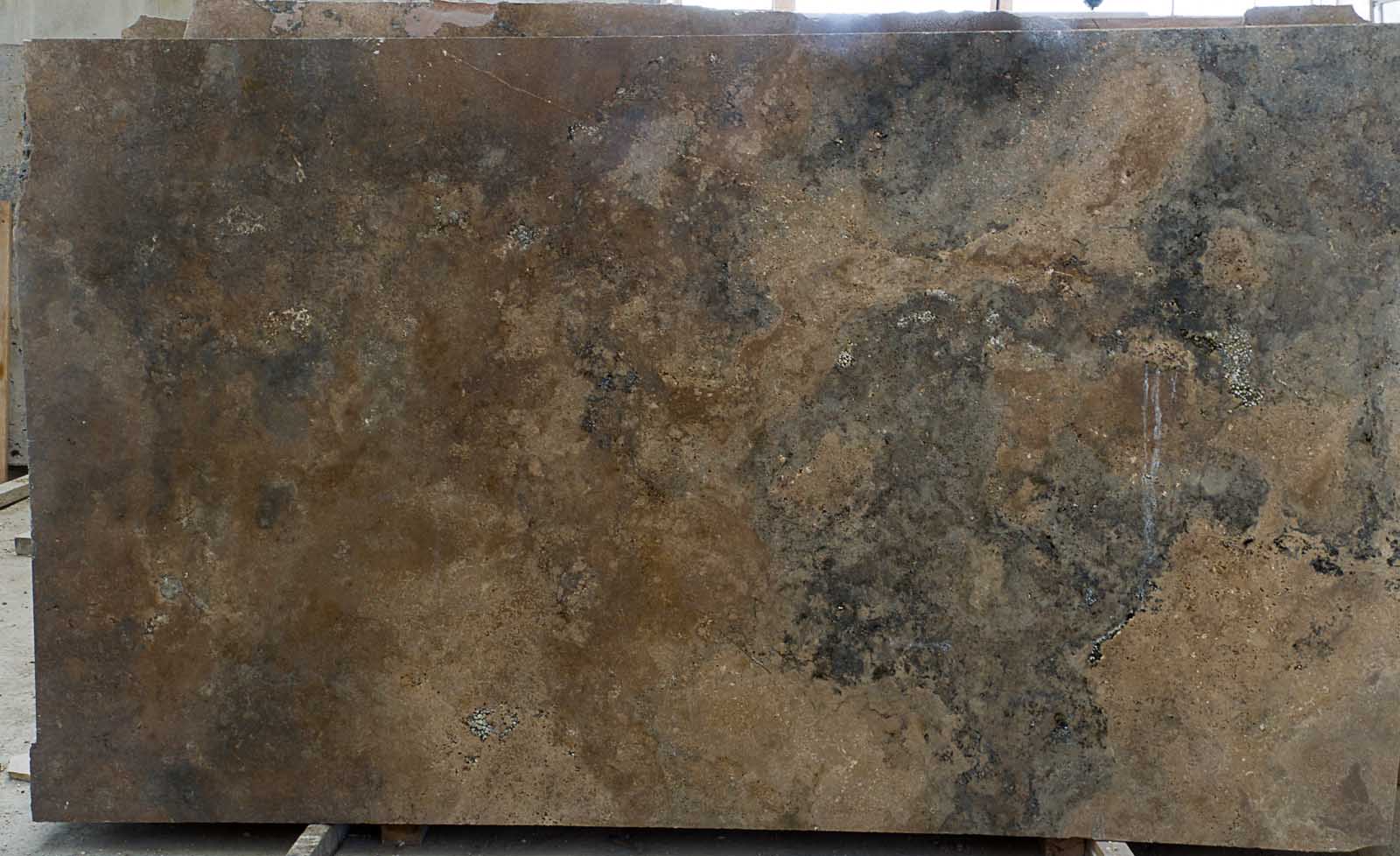
The final effect is very different, so much so that it seems like a different material. Rapolano is one of the first places where travertine was cut vein-cut, giving rise to the myriad colors of Pietra di Rapolano: and it is also for this reason that Rapolano travertine is known by everyone as “Pietra di Rapolano.” Its cloud-like patterns make it unique and different from any other travertine!