BLOG
The return of the ’90s in interior design; the aesthetic that is reclaiming homes
In recent months, the ’90s aesthetic has reemerged with unexpected strength. We are not talking about literal imitations or naive nostalgia: it’s a filtered, selective return, delving into the domestic imagery of that era and reinterpreting it with a more mature perspective. With the rediscovery of homes built between the late ’80s and early ’90s—often spacious, solid, but hindered by now outdated finishes—many homeowners are trying to regain character without reverting to ruffled curtains or hyper-polished brass.
On social media, it’s evident how interiors from that decade continue to divide: some shudder at fake plants and celestial-themed stencils, while others claim the familiarity of less rigid, more lived-in environments. Meanwhile, online searches for ’90s kitchens and inflatable furniture have increased: the truth is that the ’90s were not a monolithic block; minimal choices, DIY experiments, and a certain rustic “weekend in the countryside” taste coexisted. Today, those who revive that language do so by subtracting, selecting, and layering styles with more care than before.
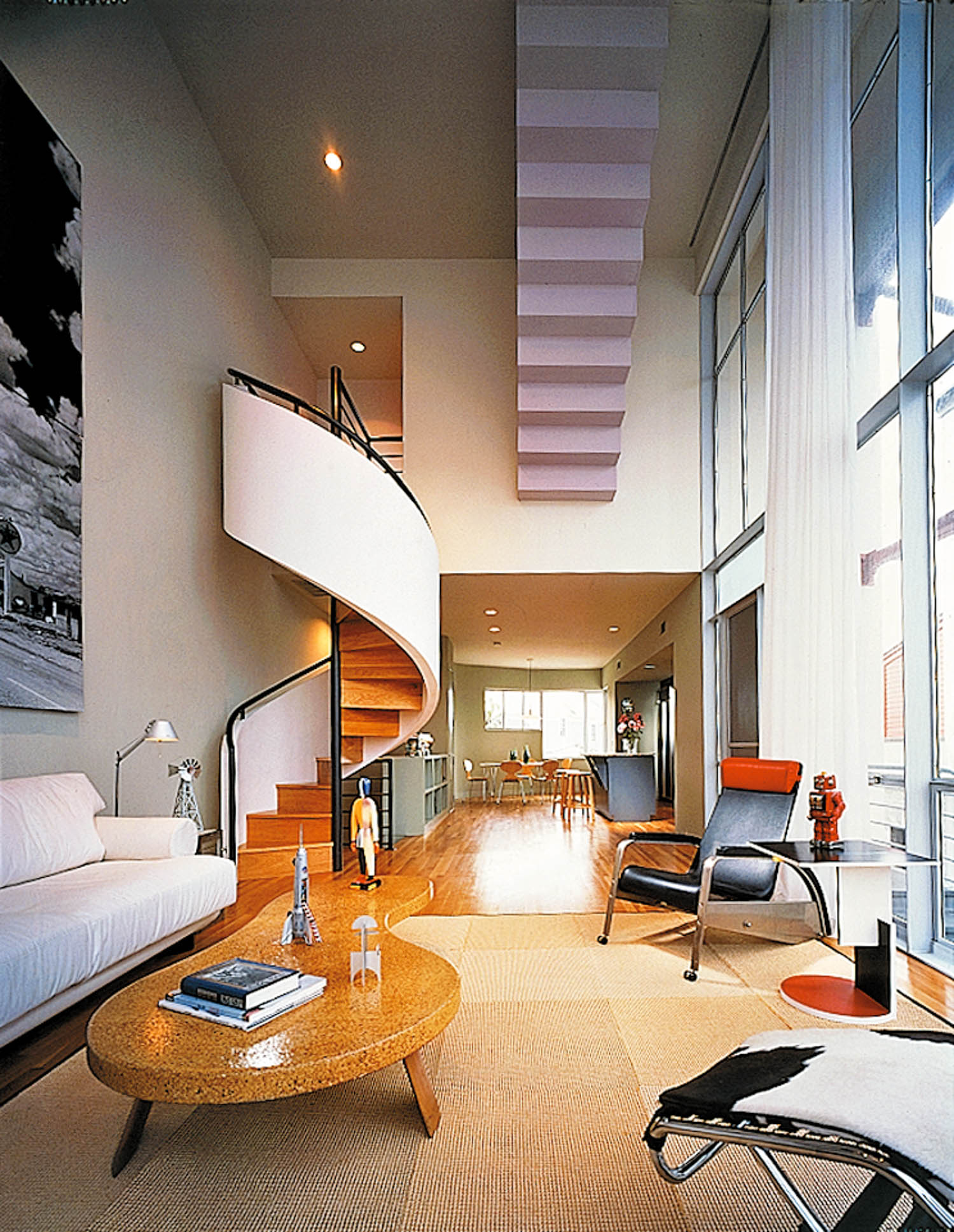
1990s Colors: The Return of Warm Tones
The palettes making a more decisive comeback are all linked to the pre-Y2K imagery, but with different finishes and applications:
- Taupe, mole, and beige: a constellation of warm neutrals that were often used with heavy finishes at the time. Today, the trick to avoid falling into the past is to work on textures: lime washes, slightly textured surfaces, soft transitions between adjoining rooms.
- Cream yellow and golden accents: a much more measured reinterpretation compared to the “Tuscan” kitchens of the ’90s. The warm color works on small pieces, panels, niches, or repainted vintage furniture, avoiding the monochrome effect of twenty years ago.
- Bordeaux and deep browns: rich shades, more red than purple, that work well in long or cozy spaces. Today, they are often applied uniformly—walls, doors, ceiling—for an immersive effect that the ’90s had not yet codified.
- Deep green, but also sage: perhaps the true protagonist of the revival. Back then, it was often paired with shiny brass; today, matte finishes or material mixes are preferred to make it more current; a color that can be soft, layerable, capable of connecting walls, tiles, and fabrics without being cloying. It works because it carries with it that idea of a “loving” home typical of the era, but without replicating its visual heaviness.
Why the ’90s Look Works Today
Many trends are not a pure return, but a reaction to previous aesthetics. After years of sleek, hyper-neutral, and minimalist interiors, the home has begun to seek atmosphere again; the ’90s offer just that: a more relaxed way of living, unafraid of eclecticism.
Those living in homes built between the late ’80s and ’90s also discover an advantage: these structures, often devoid of historical details, become neutral canvases on which to graft character—wood and classic materials like marble and travertine—without forcing imitations of eras the house does not possess. The ’90s today means above all measuring, not dressing the house as a TV set; the palette works when one or two guiding colors are chosen, modulated in lighter and darker tones, and accompanied by soft neutrals and real textures that break monotony without weighing it down. At the same time, mixing styles is almost an implicit homage to the era: a rustic table paired with a clean-lined sofa, a chrome lamp dialoguing with warm paneling, a ’90s rug placed under a modernist chair; eclecticism, often unconscious then, becomes a precise choice today.
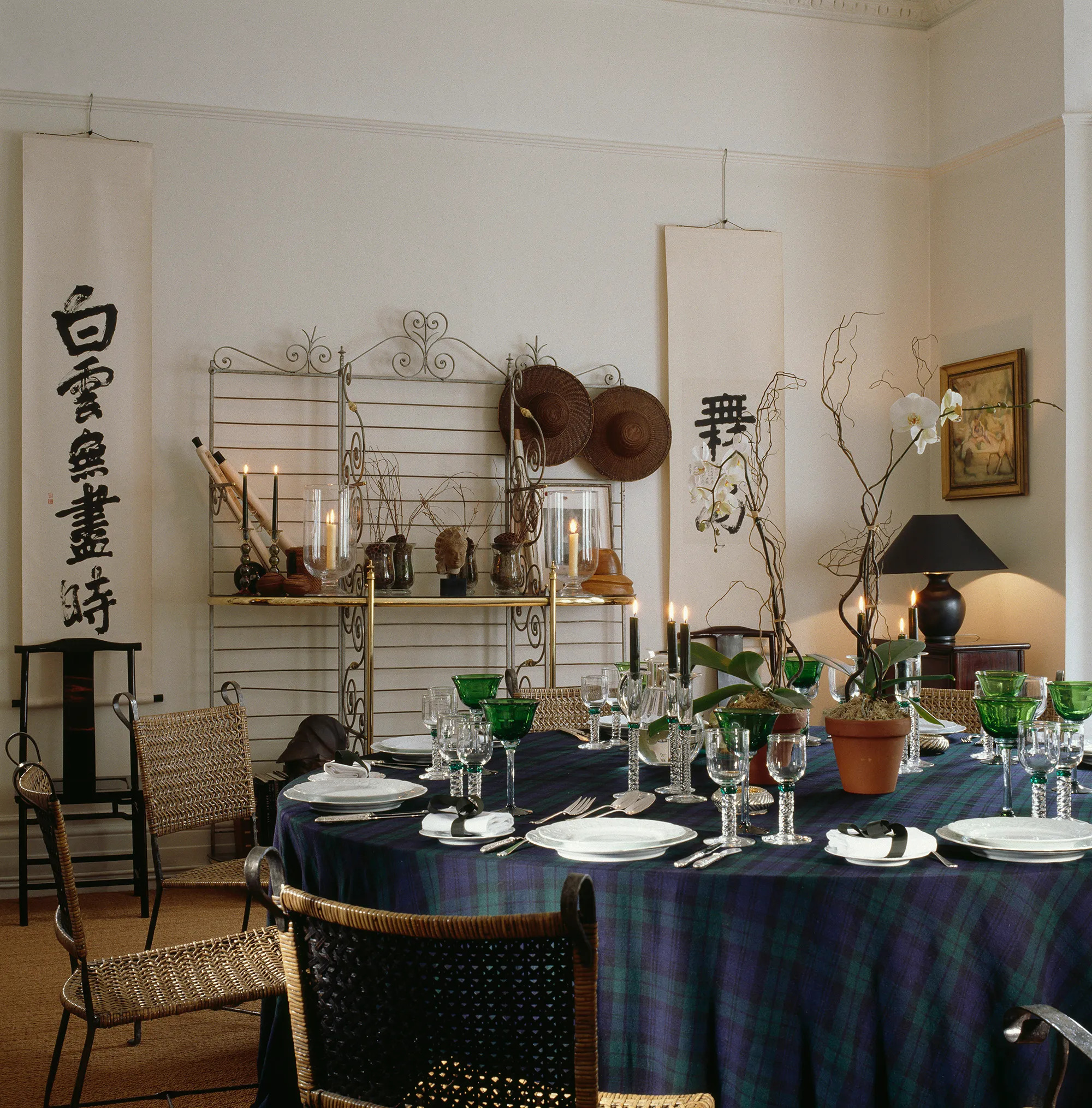
If you wish to recall the country vein or the softness of shabby chic that filled magazines in the ’90s, it’s better to do so in touches: an upholstered sofa, a pair of checkered curtains, a lived-in piece of furniture that seems to come from a country house. The idea is not to recreate a museum of the past, but to capture its most genuine spirit—that feeling of a welcoming, personal, slightly imperfect home, and therefore real.
Photo credits: houseandgarden.uk/ interiordesign.net