BLOG
The marble inlay floor of the Siena Cathedral
“…To the most beautiful and the largest and most magnificent floor ever made…” (Giorgio Vasari)
_________________________________________________________________________
The Siena Cathedral includes a series of monuments, examples of the mastery of artists and designers. Not only the splendid Cathedral, but also other parts of the complex such as the Crypt, the Baptistery, and the Opera Museum attract numerous tourists from all over the world every year.
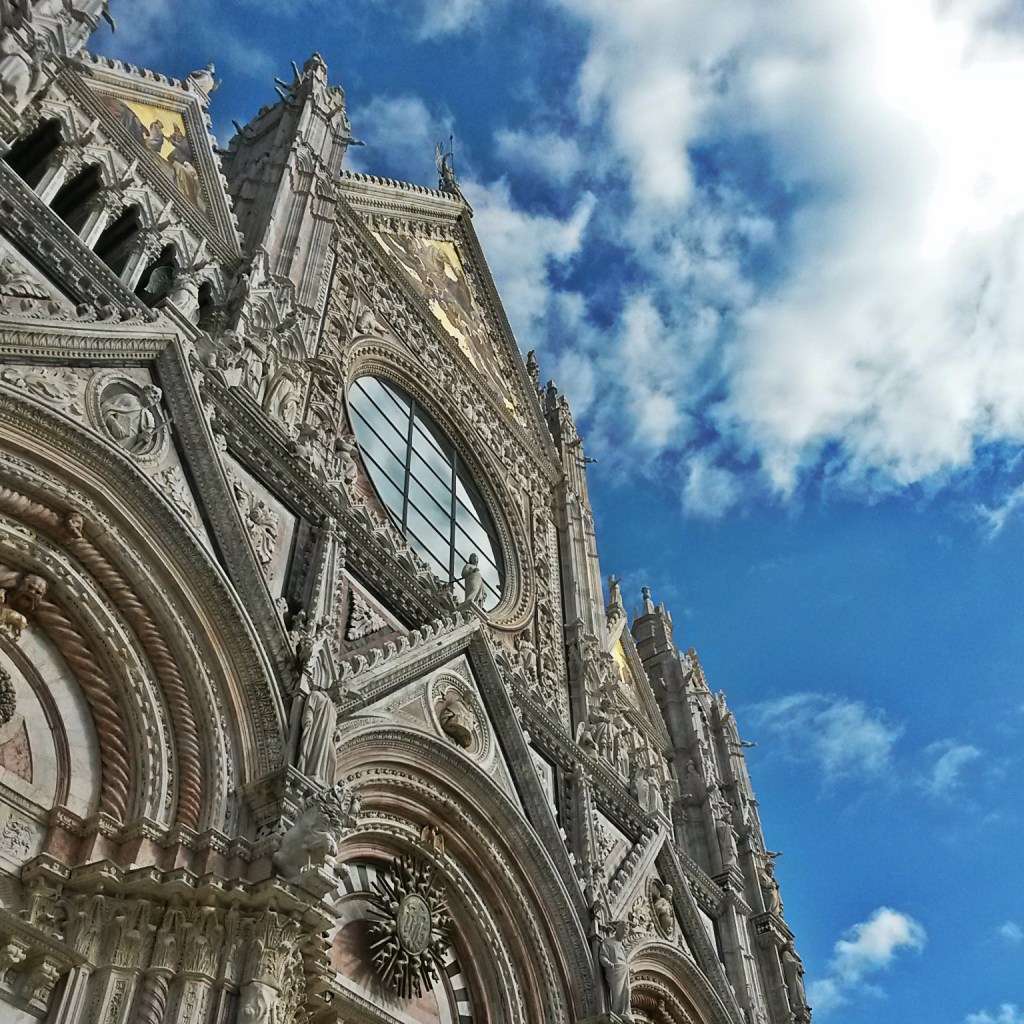
Entering the Cathedral, the heart of the city, you can already feel the tradition and history of the Sienese artistic school. Walking through small streets, among medieval palaces, you reach the square of the same name, which is one of the most distinguished examples of an Italian Romanesque-Gothic cathedral.
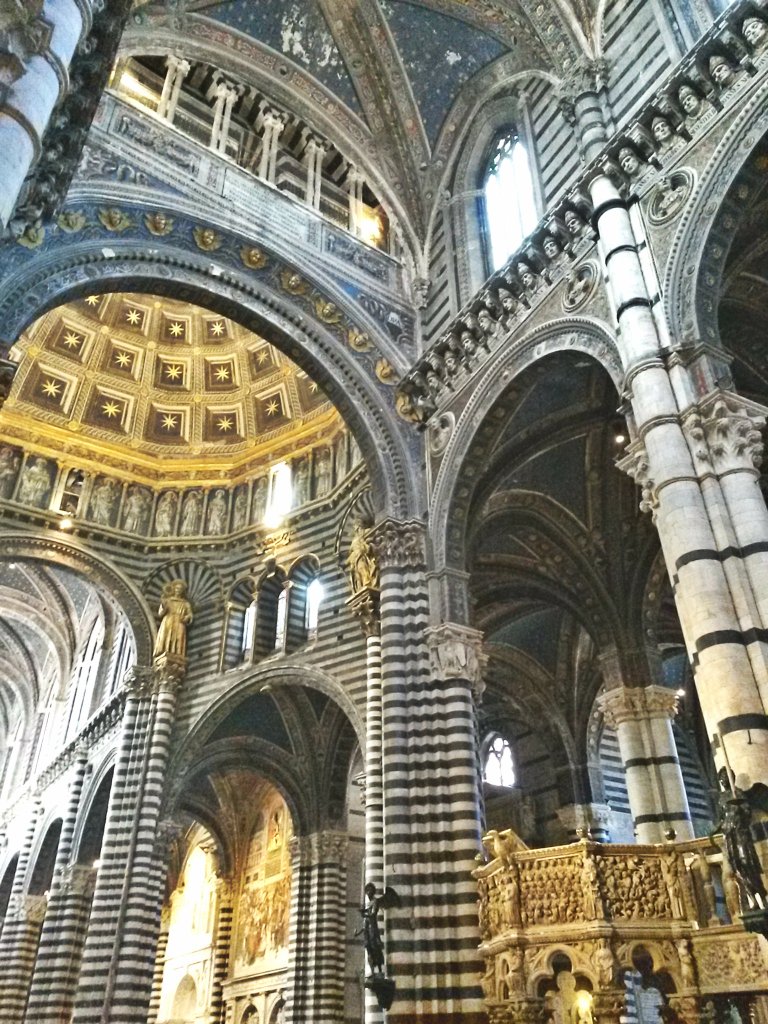
Many documents recount its history, records of payments and material purchases that provide information on the construction events. The interior is characterized by white and dark green almost black marbles that cover the building according to the typical taste of Tuscan Romanesque.
An exceptional work is the floor which for Vasari is an unsurpassed example, begun in the 14th century and completed only in the 19th century. The work extends over a surface of 1,300 square meters, in addition to decorative motifs there are fifty-six panels created using the techniques of marble inlay and sgraffito.
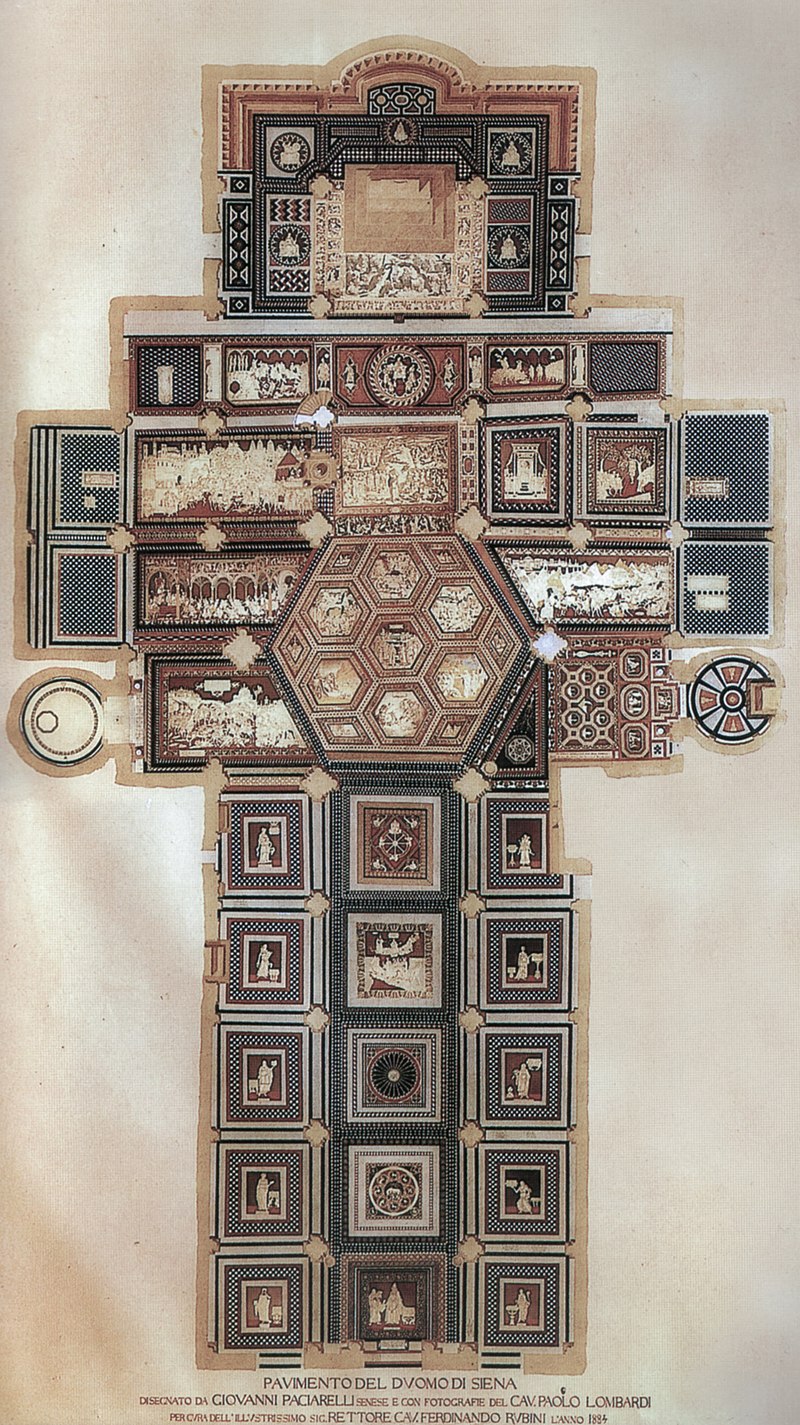
Initially, the panels were made by engraving the white marble slabs with a chisel or drill and then filling them with black stucco, this is the technique known as sgraffito.
Later, colored marbles were added to the Cathedral floor, juxtaposed together as in the case of wooden inlays according to the marble inlay technique. A very elaborate ornamental technique where the greatest difficulty is to section the colored marble into thin sheets that can be shaped and used for decorations.
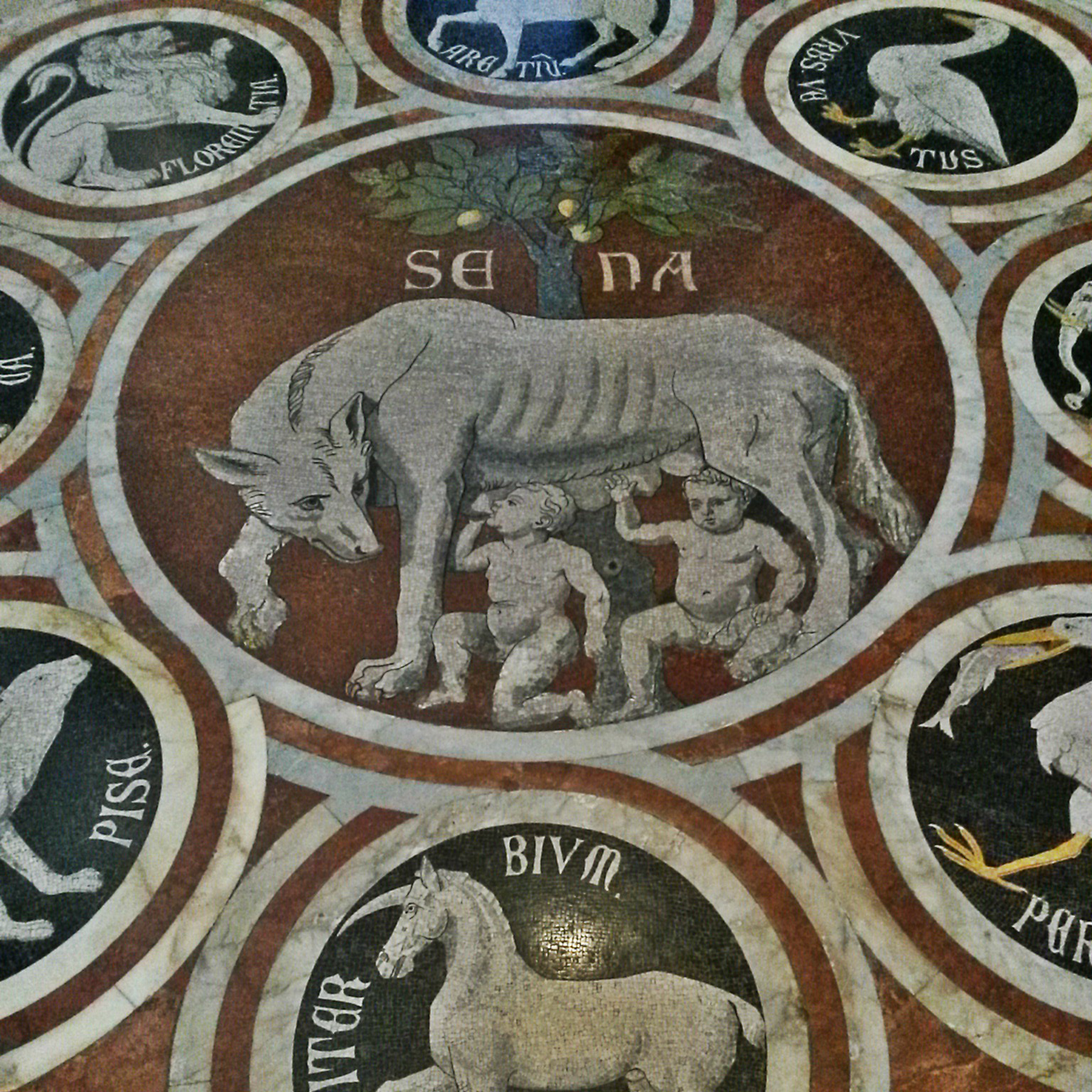
The subjects of the floor decorations are numerous and varied, from the Sibyls to Hermes Trismegistus to the She-wolf nursing the twins, which reprises the myth of the she-wolf, symbol of the city of Siena, nursing Aschio and Senio, sons of Remus and founders of the city. The she-wolf is placed in a circle connected to other circles depicting symbols of Italian cities.
Among other subjects are allegories and themes of classical and pagan antiquity as well as the history of the Jewish people.
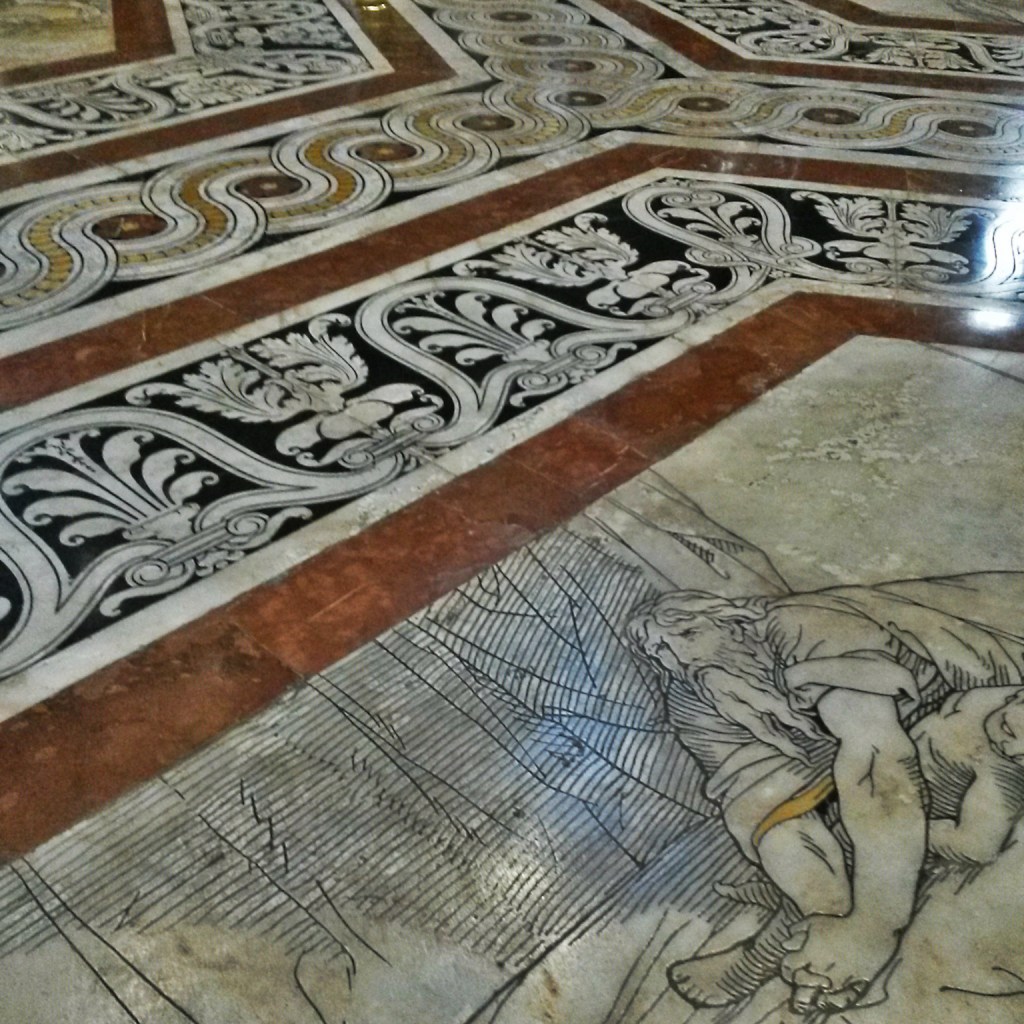
For conservation reasons and to prevent the passage of the large number of visitors, the floor is uncovered and visible only at certain times of the year; for more information on the Metropolitan Opera Complex of Siena.