BLOG
Stone Facade Cladding: Examples of Contemporary Architecture
Stone has always been one of the most suitable materials for cladding building facades.
Originally, the load-bearing structure of buildings was made of structural stone blocks, which not only ensured the static stability of the buildings but also formed the outer skin, the finish, and the final image of the buildings.
Currently, the structural function of buildings is assigned to independent structures made of reinforced concrete or steel. Partition walls “seal” the buildings, meeting insulation needs rather than structural ones.
The external finish of buildings is generally plaster, which can be easily colored to give the final image to the construction.
Of course, there are many other possibilities for external finishes, but generally plaster finish is considered the most economical, which may be true in the short term, but certainly not over time.
A plaster facade needs to be repainted at least every 10/15 years, if not completely replastered, which are costly operations in themselves and made much more expensive by the need to install scaffolding for the work.
The choice to externally finish a building in stone probably involves slightly higher costs at the time of construction but makes maintenance work over time completely unnecessary: stone does not deteriorate quickly and, if well installed, will remain perfect forever, greatly enriching and diversifying the final image of the building.
Moreover, by adding the possibility of creating ventilated stone facades (which leave a gap between the stone and the actual wall), significant advantages are obtained in terms of insulation of the external walls, greatly contributing to achieving the performance required of buildings today.
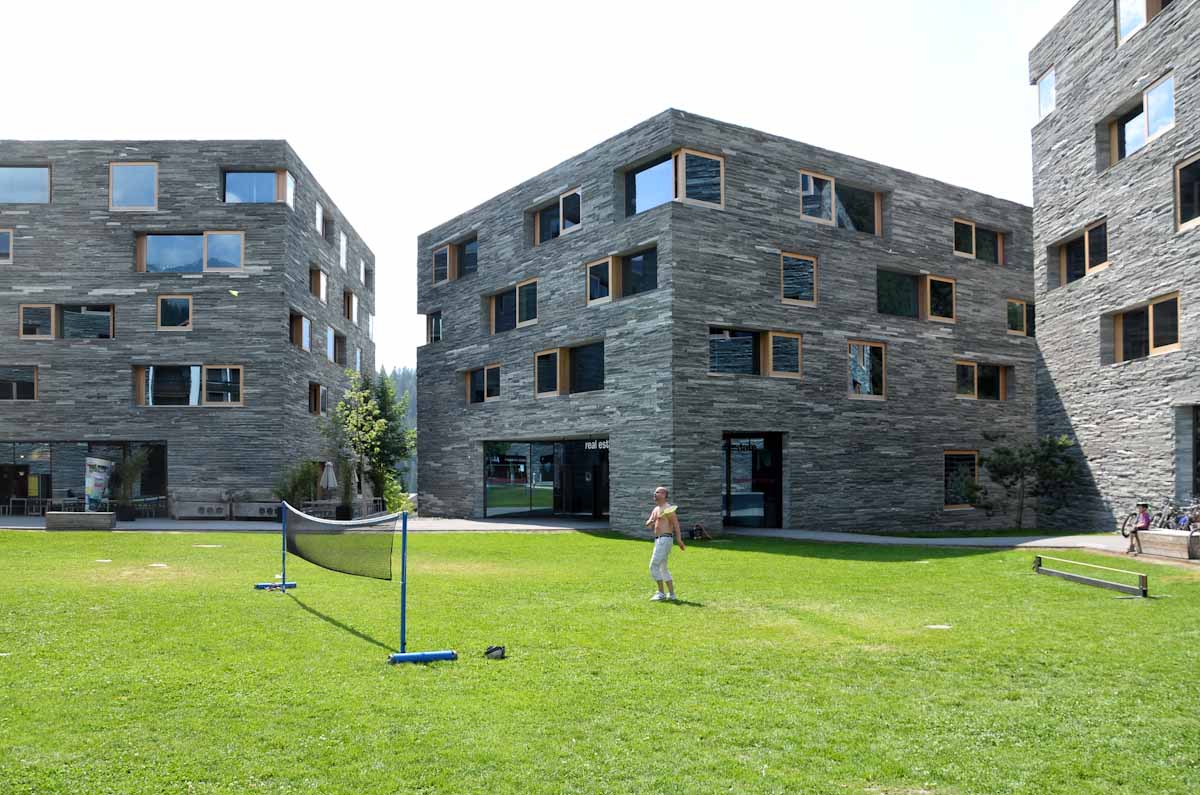
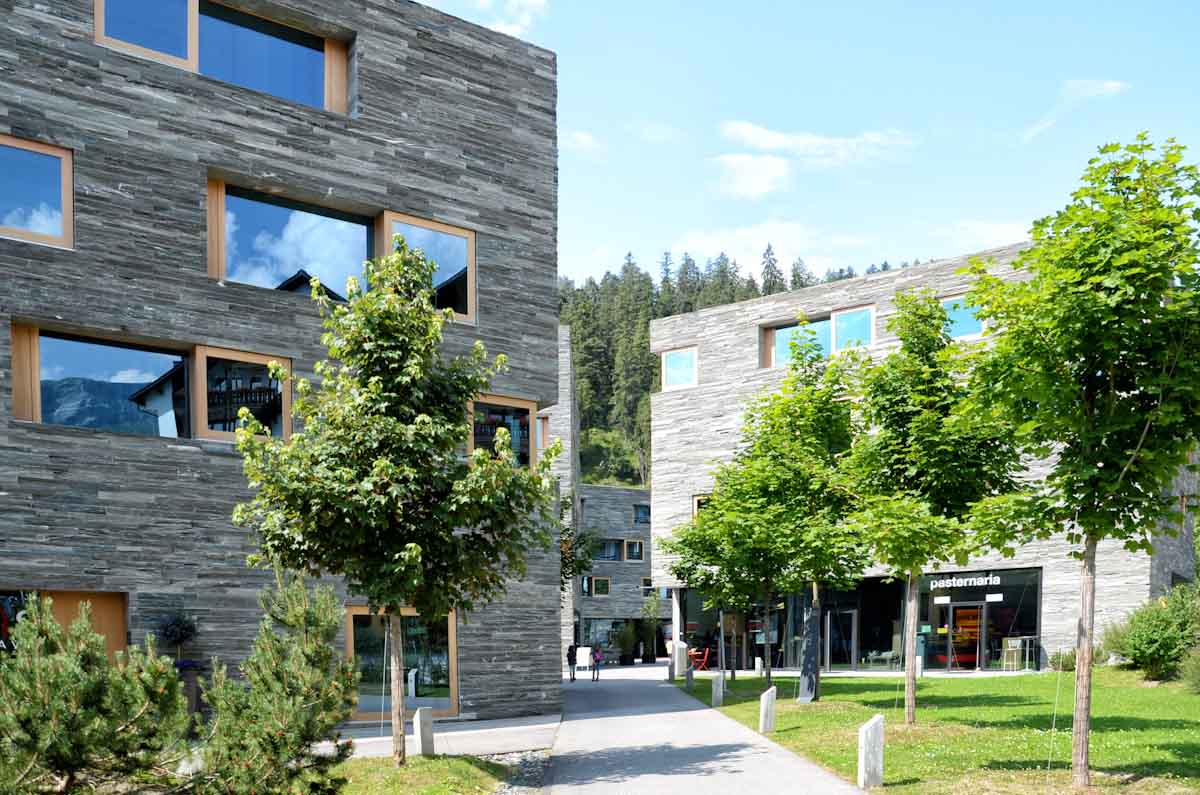
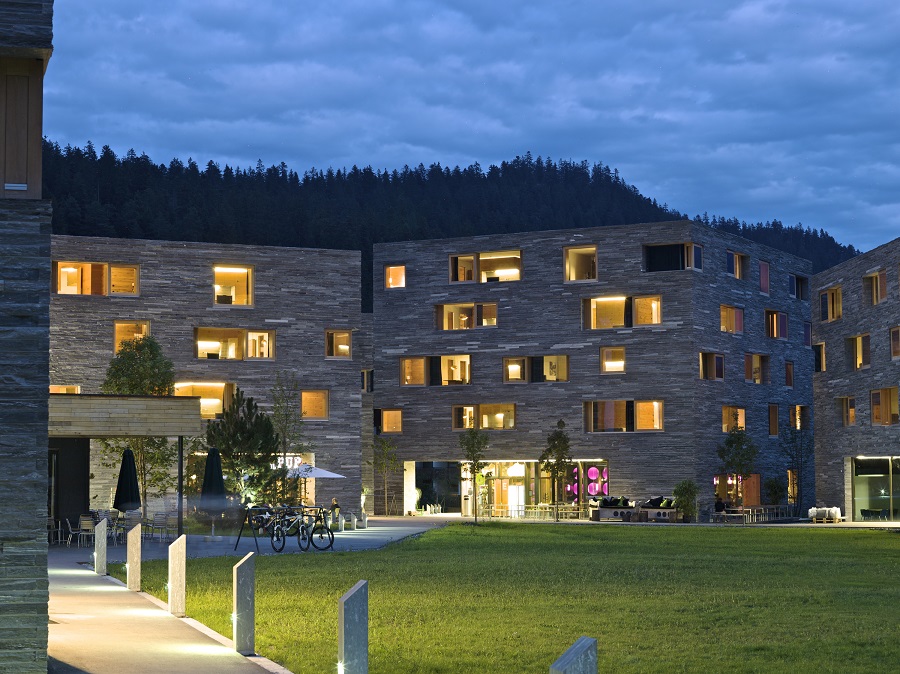
There are numerous examples in contemporary architecture, such as the Rockresort in Laax, Switzerland, a hospitality complex located at the foot of the ski slopes, finished externally with local quartzite cut into strips of various sizes, but left “split” on the outer faces. The integration into the context is optimal, and the aesthetic effect is very interesting.
Travertine is very well suited to being used as an external cladding material, both in ventilated facades and simply by gluing slabs onto a suitably prepared wall and following certain installation precautions.
The resistance of this material to weathering is well tested (the Colosseum, St. Peter’s in Rome, and thousands of other historic buildings are made of travertine), and the possibilities for aesthetic definition are limitless, given the many colors available.
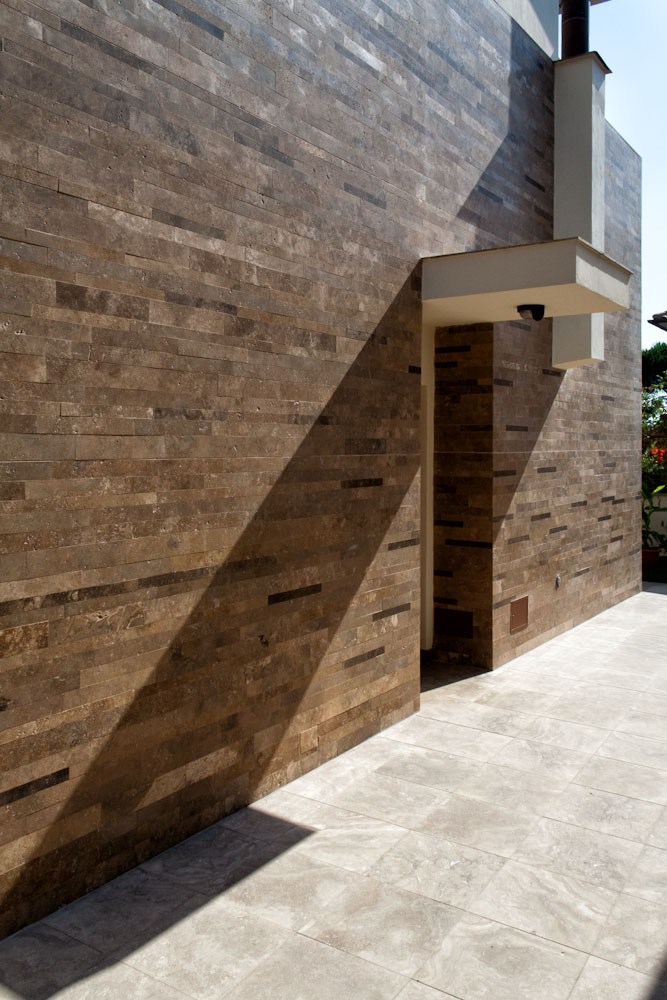
In this example, architect Leonardo Mannini has completely clad a residential building he designed in dark Pietra di Rapolano, cut into strips of various formats and mixed colors. This chromatic effect is easily achievable indoors with the Strips mosaic with a strip pattern and applied on nets for easier installation.
There are multiple uses for travertine, which due to its characteristics, frost-resistant and durable, is perfect for exteriors. To see more examples of uses in outdoor environments, take a look at our projects.