BLOG
Rapolano stone in the history of art
In ancient times, cities were always built with local materials.
Only in palaces and buildings symbolizing power were materials sometimes used that came from afar.
Architecture has always been the tangible manifestation of power and the strength of its owner. Only those who wanted to, and could, show themselves above others decided to invest fortunes to import building materials for their structures, to amaze and to mark differences, starting from the places they inhabited. However, the natural and most obvious way to build was through the use of what was most readily available.
Thus, the cities and homes scattered across the countryside were as perfect and wonderfully integrated into the landscape as possible, being themselves an integral part of that landscape: in areas where the rocks and stones of the mountains were gray, gray buildings arose; where the earth was red and so were the stones, or at least in tone, the buildings were of those colors.
It was the most perfect integration capable of making each place unique and full of identity, a place where human creativity, the ability to generate forms and expressive culture, found its perfect synthesis in the use of materials and colors of the surrounding environment.
Thus, Viterbo is of Peperino, Rome is of Travertine, Florence of Pietra Forte, Siena of Pietra di Rapolano (and terracotta); these and a thousand other places in the world are wonderful precisely because they are unique, thanks to the genius and culture that created them, but also thanks to the materials and colors that characterize them.
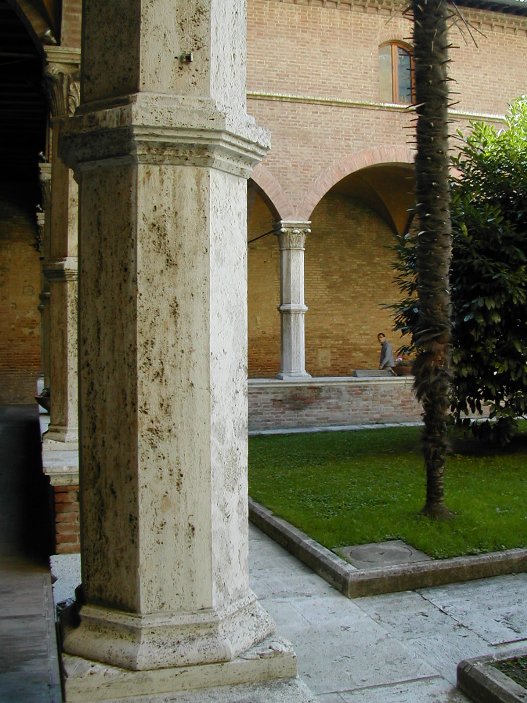
As mentioned, Siena is no different.
It is a city rich in history and tradition, where great artists, known to art history, but also completely anonymous (yet no less ingenious!), have over the centuries built, piece by piece, a city that is a total work of art.
The Rapolano quarries, located about 30 kilometers from Siena, are the closest stone quarries for construction.
30 kilometers, without trucks, is still a lot!
Man discovered that by baking mud, it acquired incredible stability and resistance characteristics, becoming a true artificial stone.
But even in this case, the soil of Siena is not the same as that of Florence or Sicily, and when baked, although it changes color, it remains something profoundly local, unique, and perfectly integrated into the context.
Thus, in Siena, there were two building materials: terracotta and Pietra di Rapolano, the former always used, the latter to emphasize and further enhance a building or part of it. From the combination of these two materials, generated from the same land, the Sienese wonders are born.
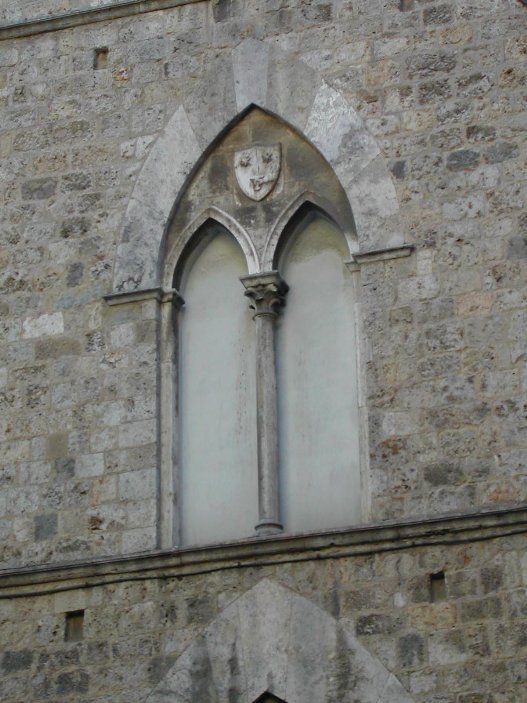
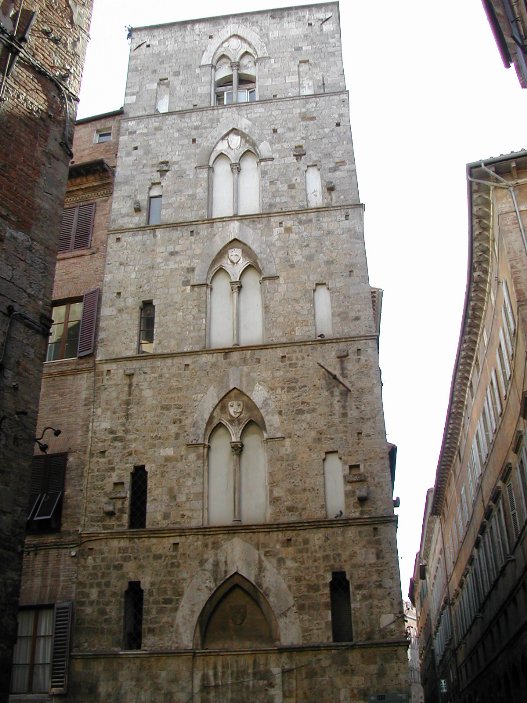
The colors of the stone are those still extracted from our quarries today, ranging from the white of the Torre del Mangia, the current PDR 031, to the light beige used in numerous cloisters and decorations, the current PDR 006, to the darker and veined colors, more typical of Tuscan travertine, found in many Gothic buildings in Siena and especially in the building that is probably the headquarters of the oldest bank in the world, the headquarters of Monte dei Paschi, in the two current lighter PDR 013 and darker PDR 008 variants.
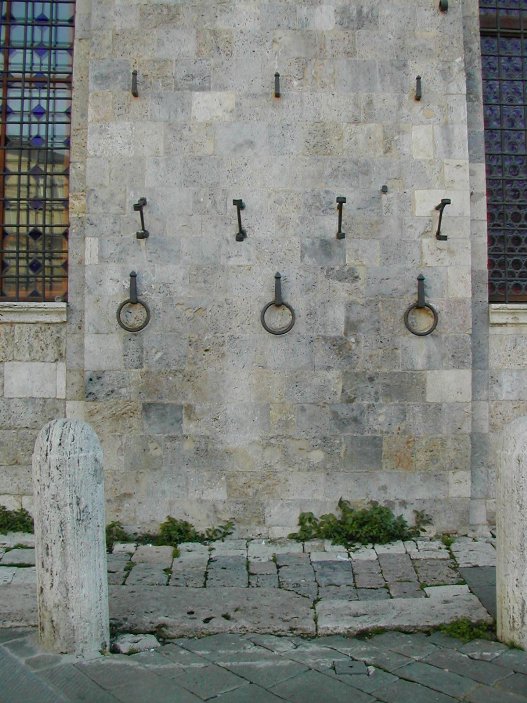
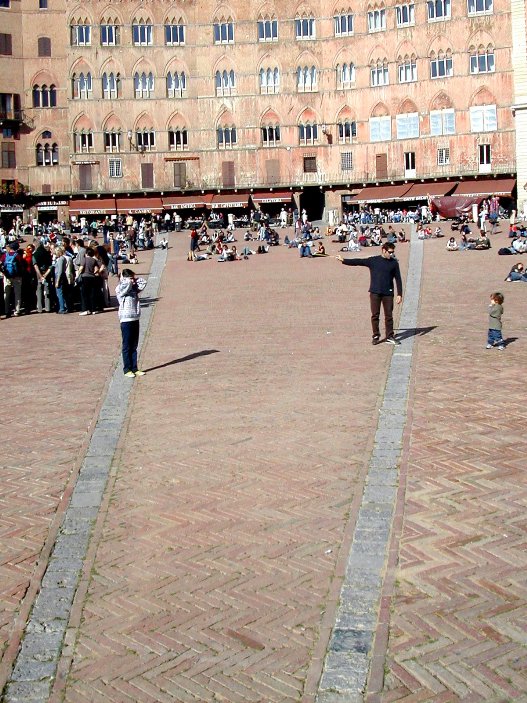
It is clear how symbolically and physically Pietra di Rapolano, the travertine of the Etruscans, is an indispensable resource for Siena.