Previous
Various processes, one soul
Castelfalfi is a medieval village in the Tuscan countryside that has been completely renovated, becoming a center for relaxation and leisure.
The overall project, now fully operational, consists of the village, some farmhouses, and a newly built 5-star hotel. Everything revolves around a golf course of international prestige.
The restoration and transformation of the ancient village was designed by the Melucci & Nardini Associati architecture studio in Florence.
Pietre di Rapolano supplied the stone materials for the external pavements, bathroom coverings, kitchens, and condominium stairs.
The choice of travertine
The chosen travertine, light but with characteristic “clouds,” gives the environments a character of tradition and harmony.
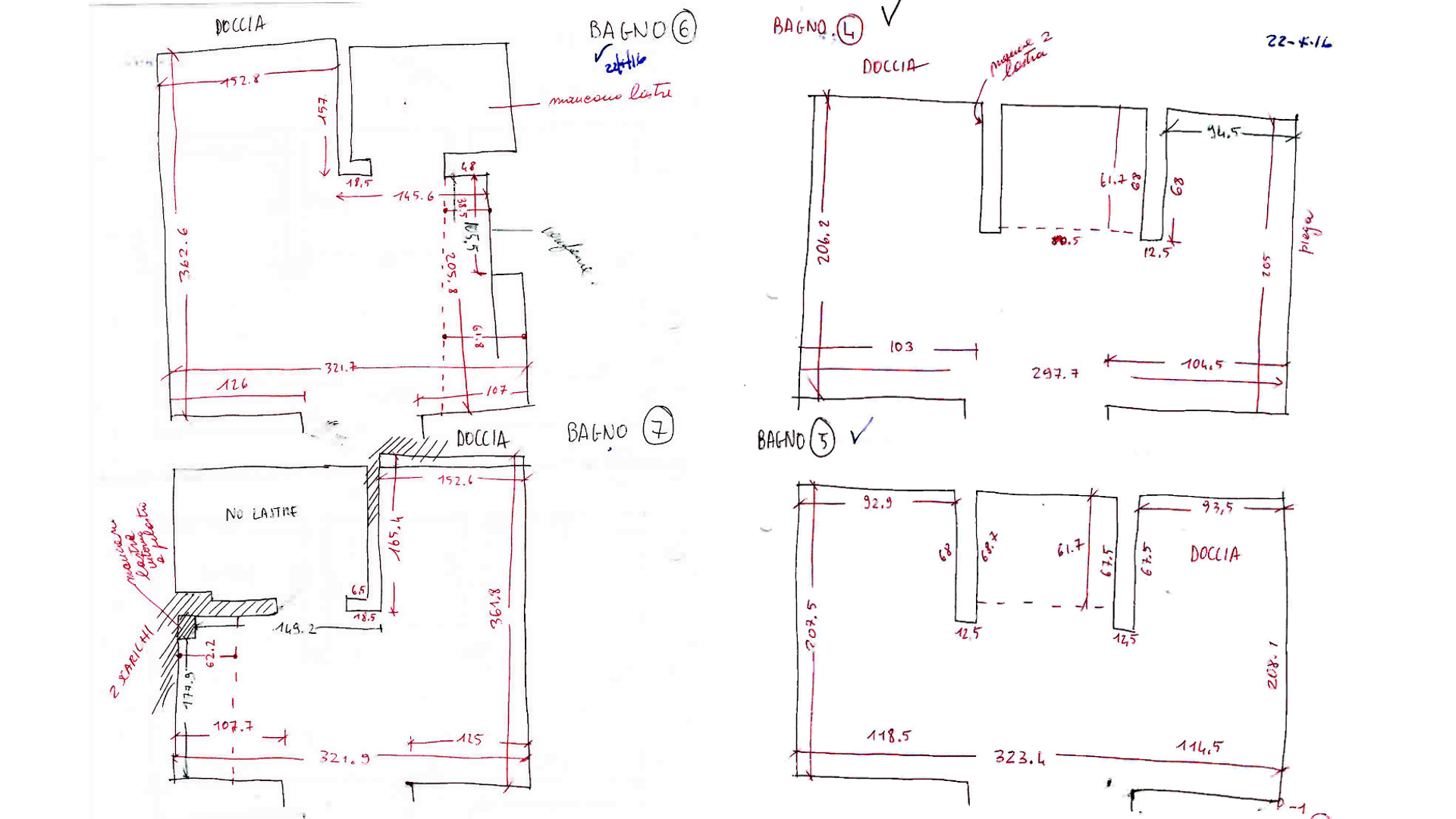
This was a restoration intervention on ancient buildings that required accurate surveys on environments each different from the other.
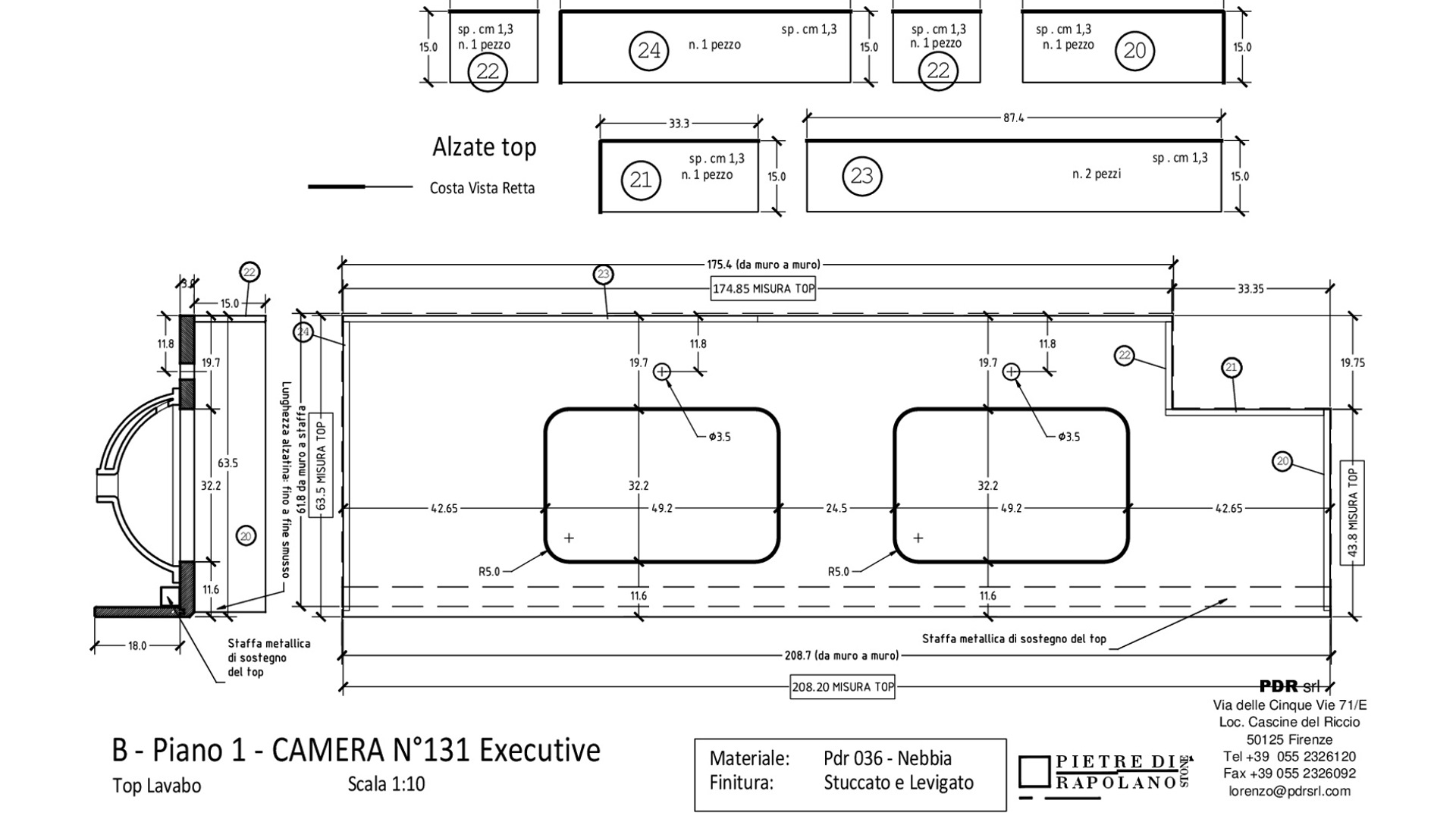
All bathrooms were made in Nebbia color selection travertine (code PDR036) in a stuccoed and polished finish: with the same material, travertine tops were made assembled off-site, according to the specific measurements required by the project.
About two years after the completion of the village restoration, work began on the construction of the TUI BLUE SELECTION, a 5-star hotel, located near the village and immersed in an exclusive setting.
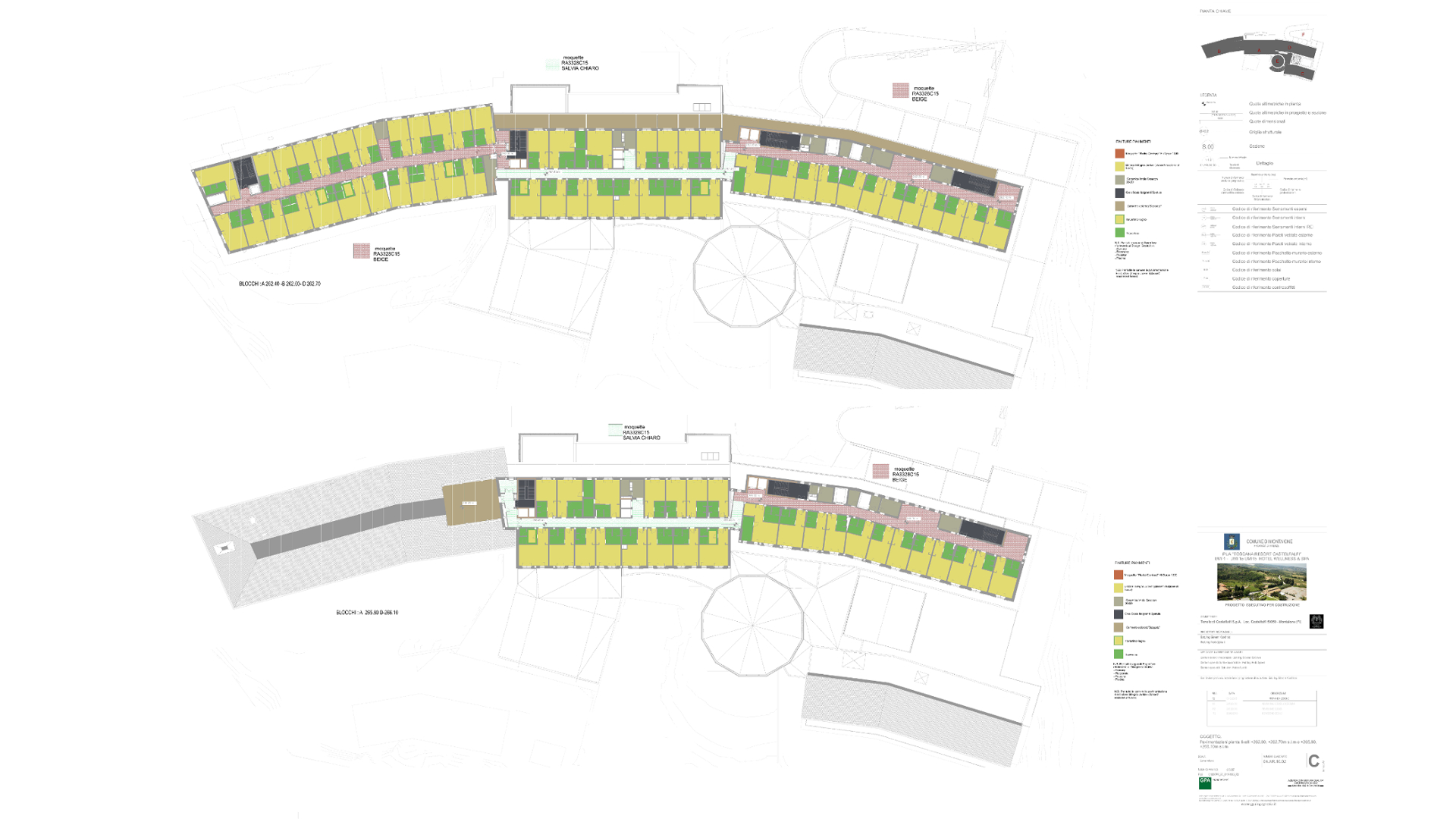
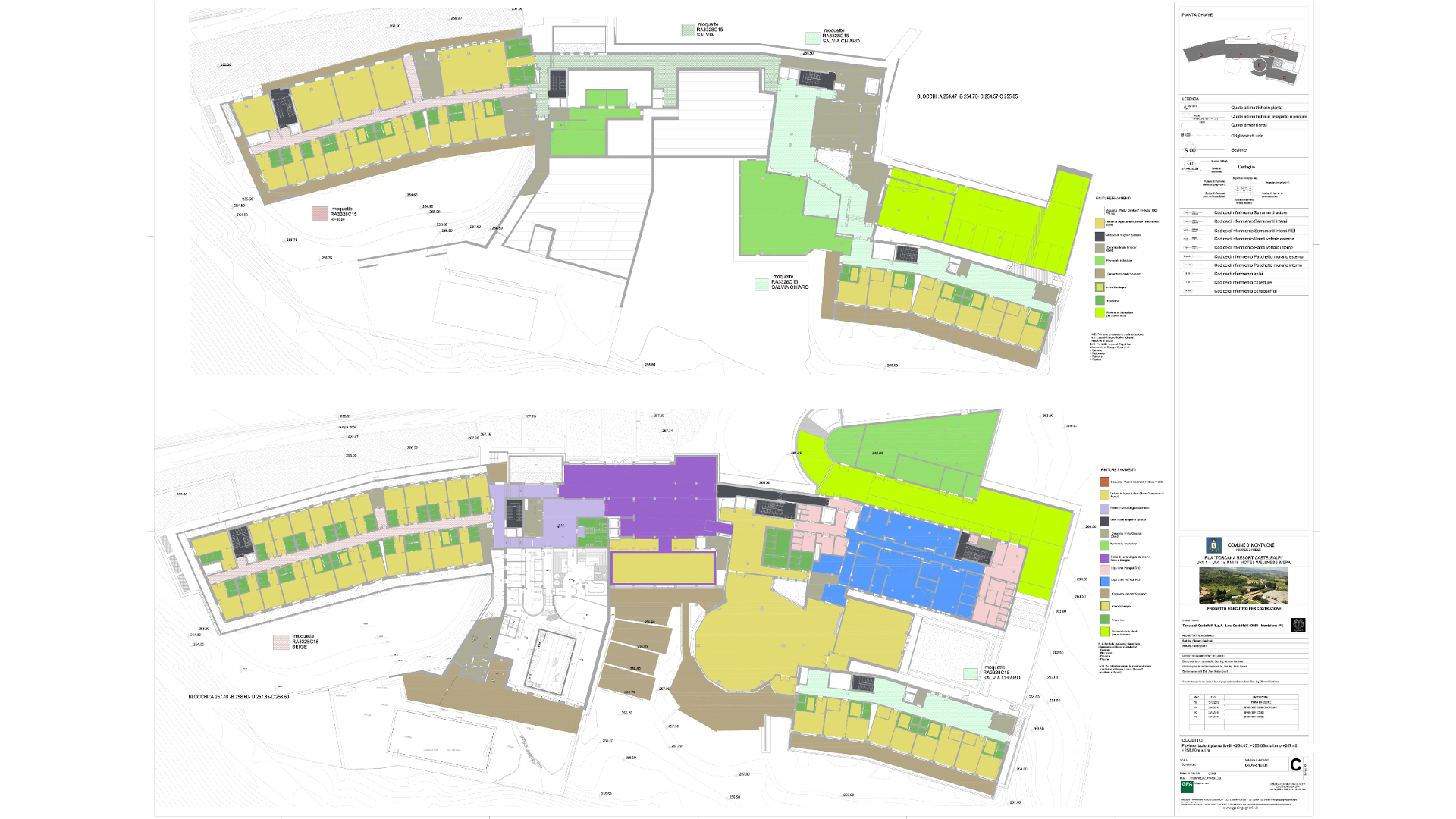
Including 120 rooms, a SPA, a fitness area, a restaurant, a meeting room, some outdoor and indoor pools, the structure covers a total area of over 16,000 square meters.
The room design is signed by the MRM architects studio with GPA engineering and executed by the Inso company of Florence.
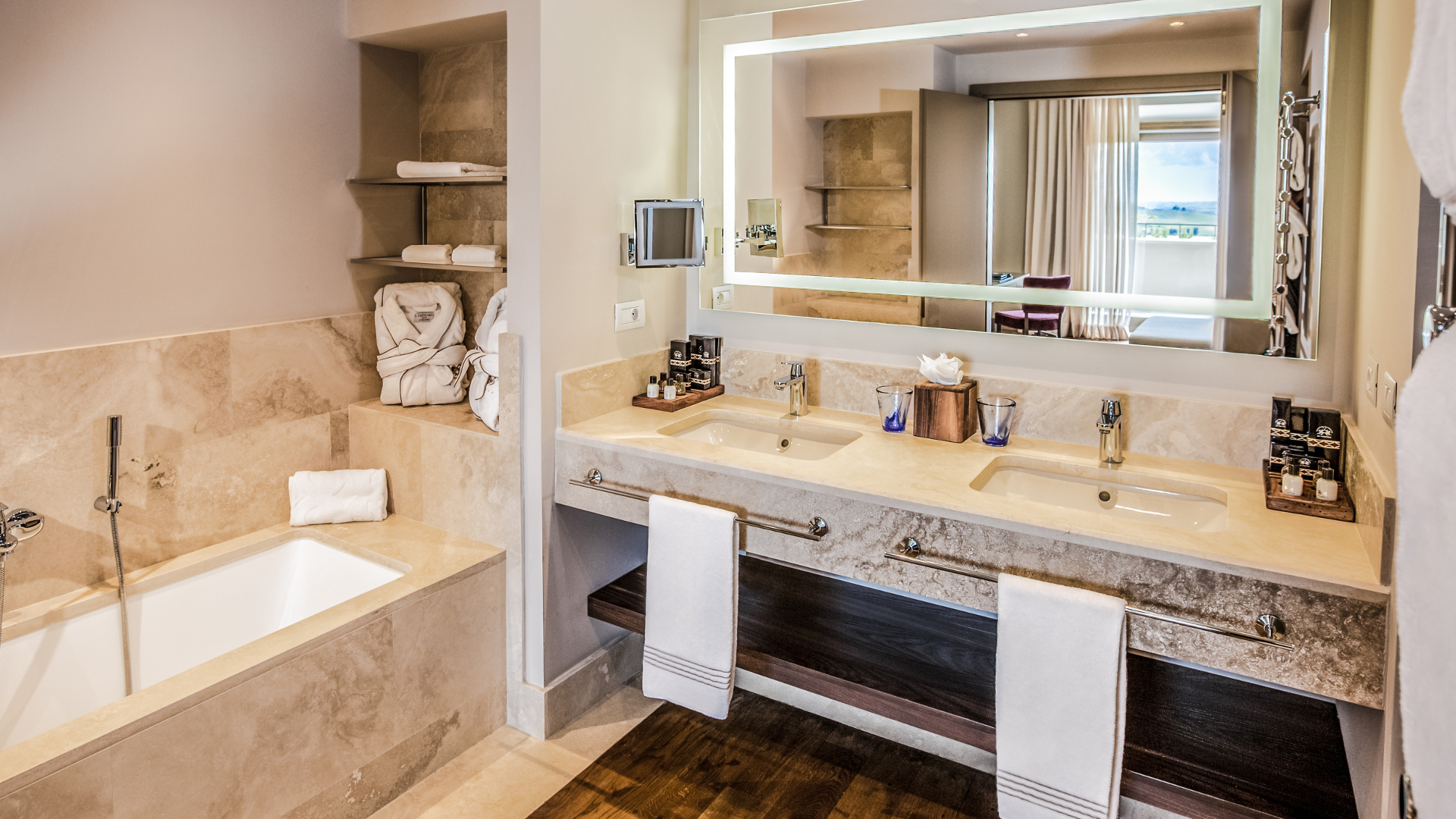
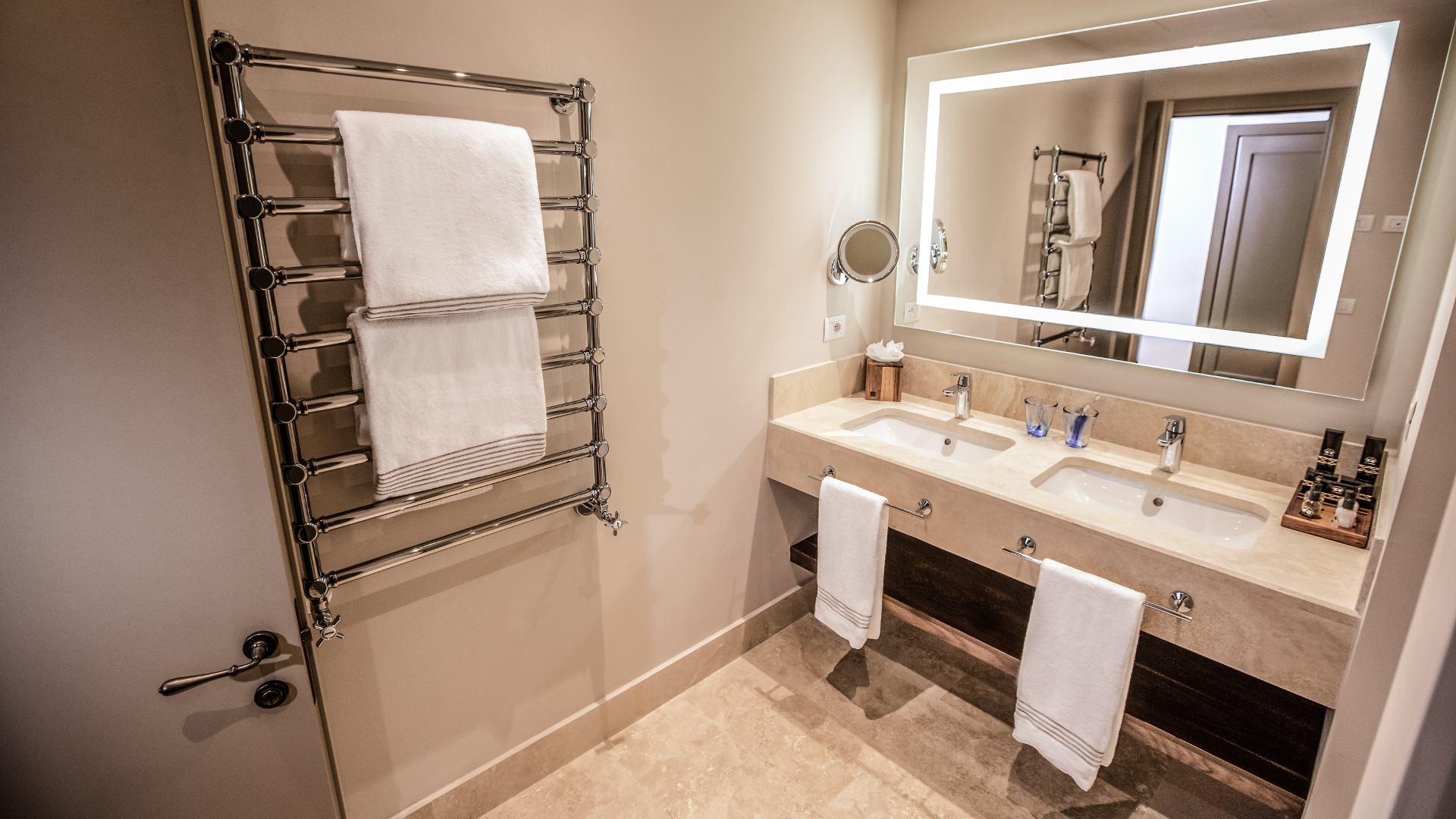
Following the design inspiration of the village, the Nebbia selection travertine (code PDR036) with a stuccoed and polished finish, was used in all the bathrooms of the various types of hotel rooms.
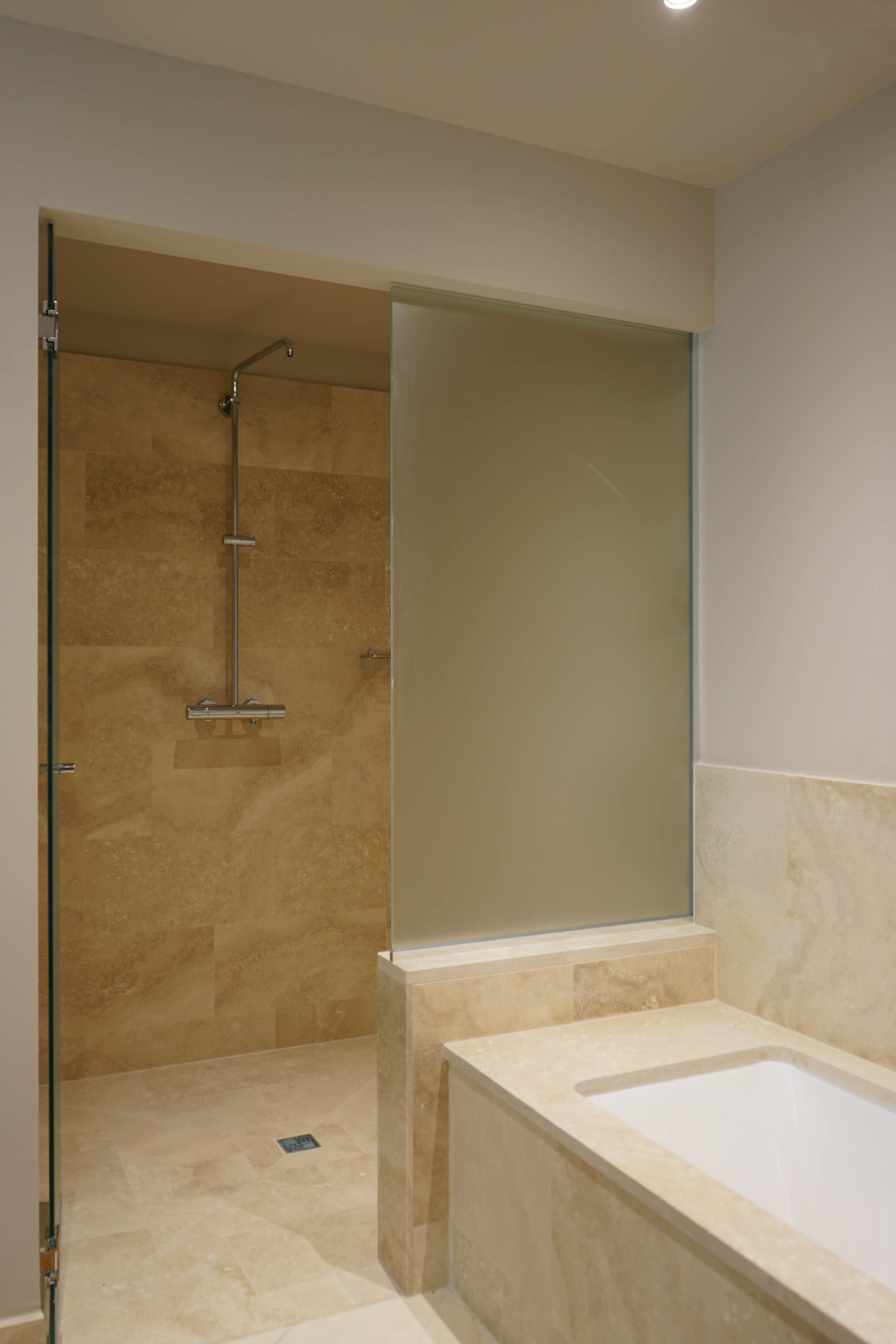
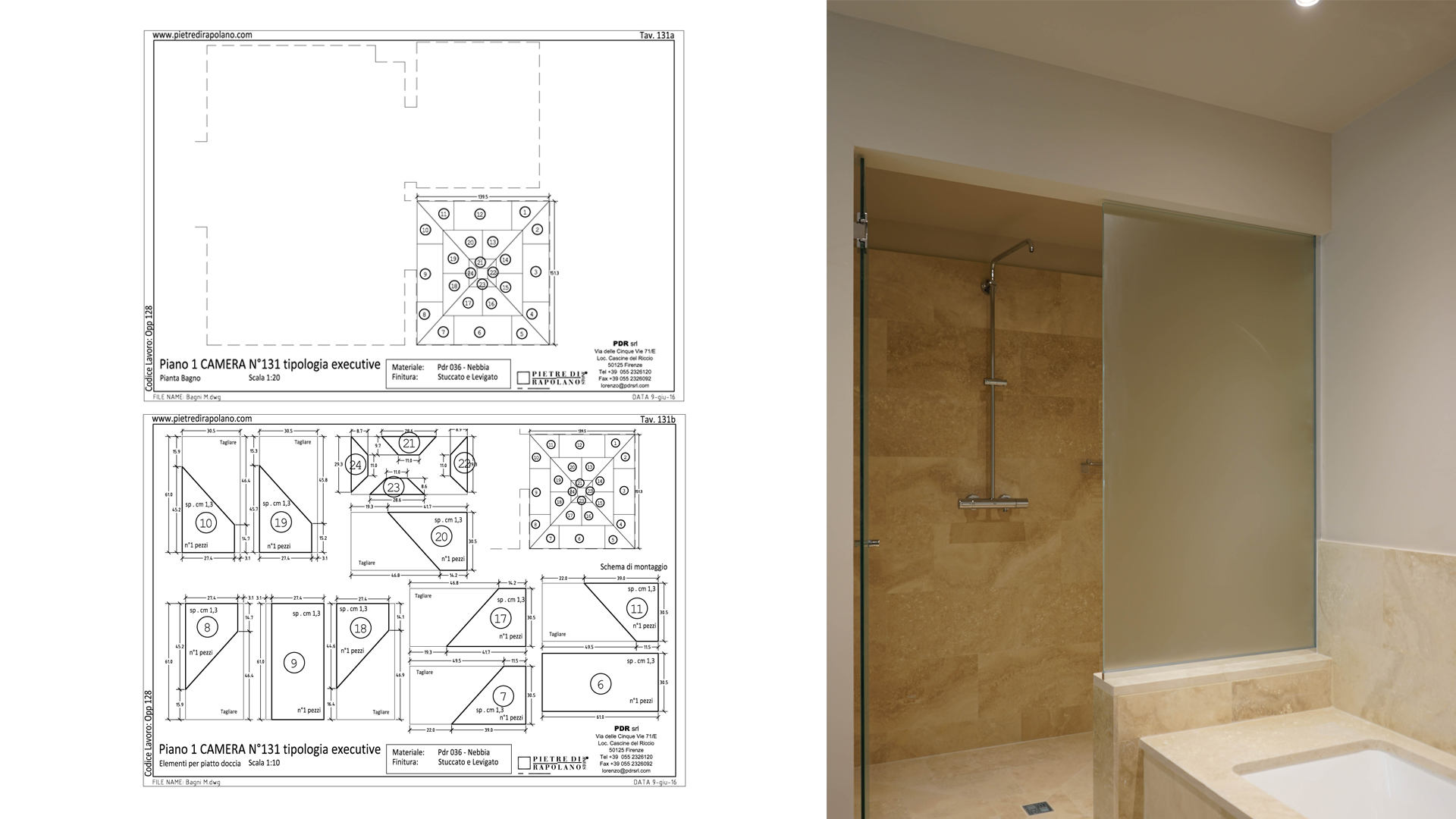
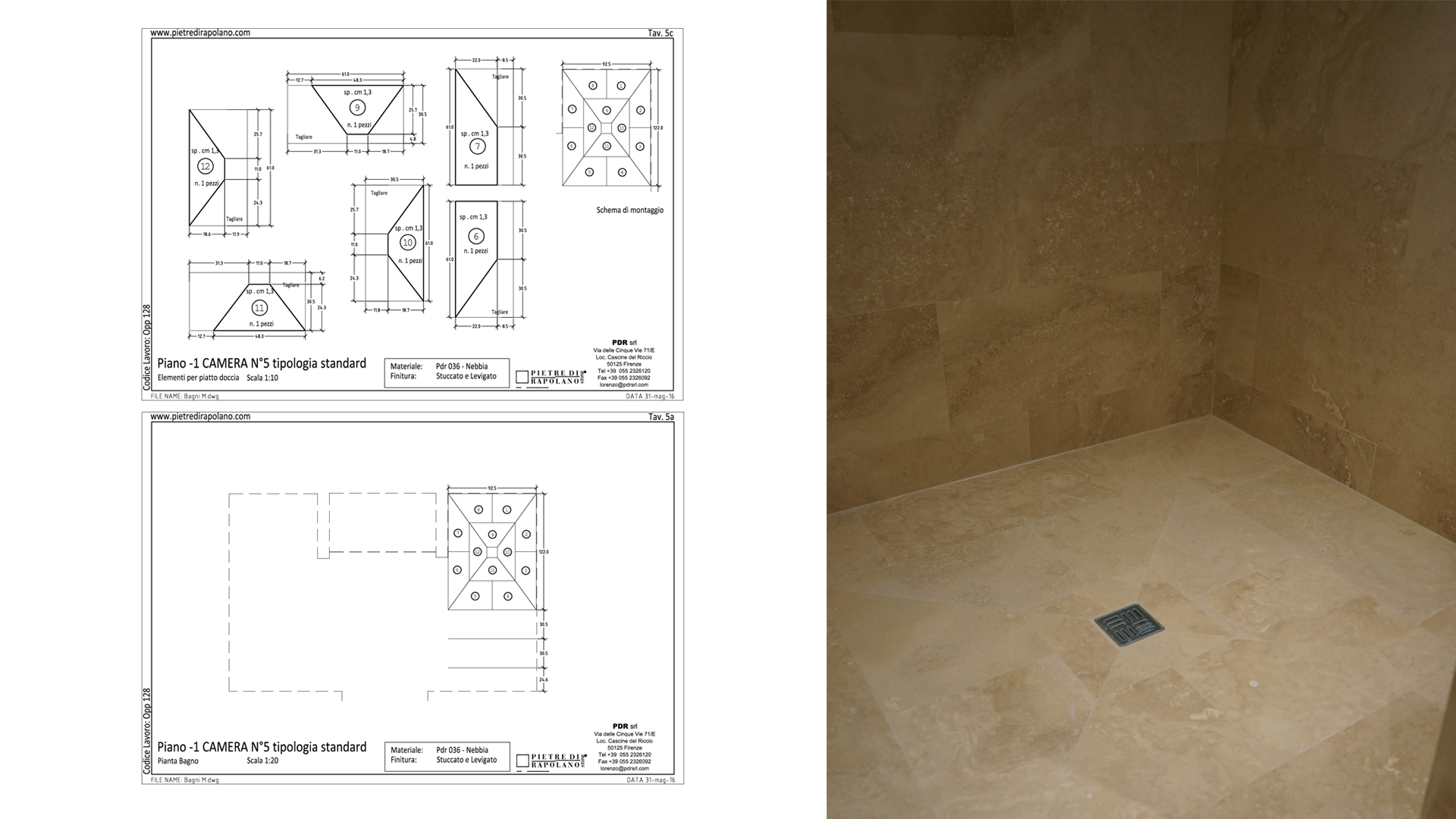
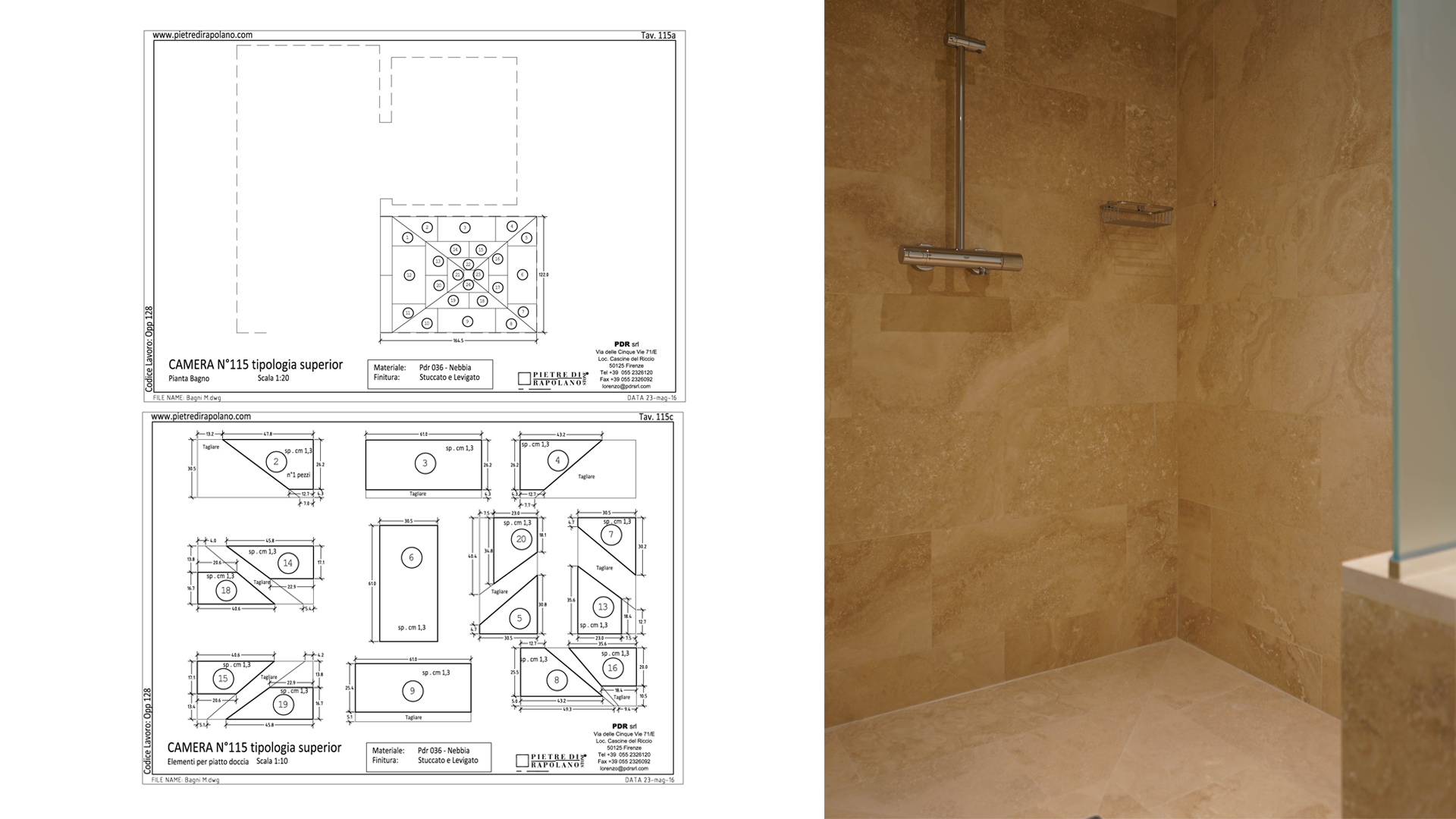
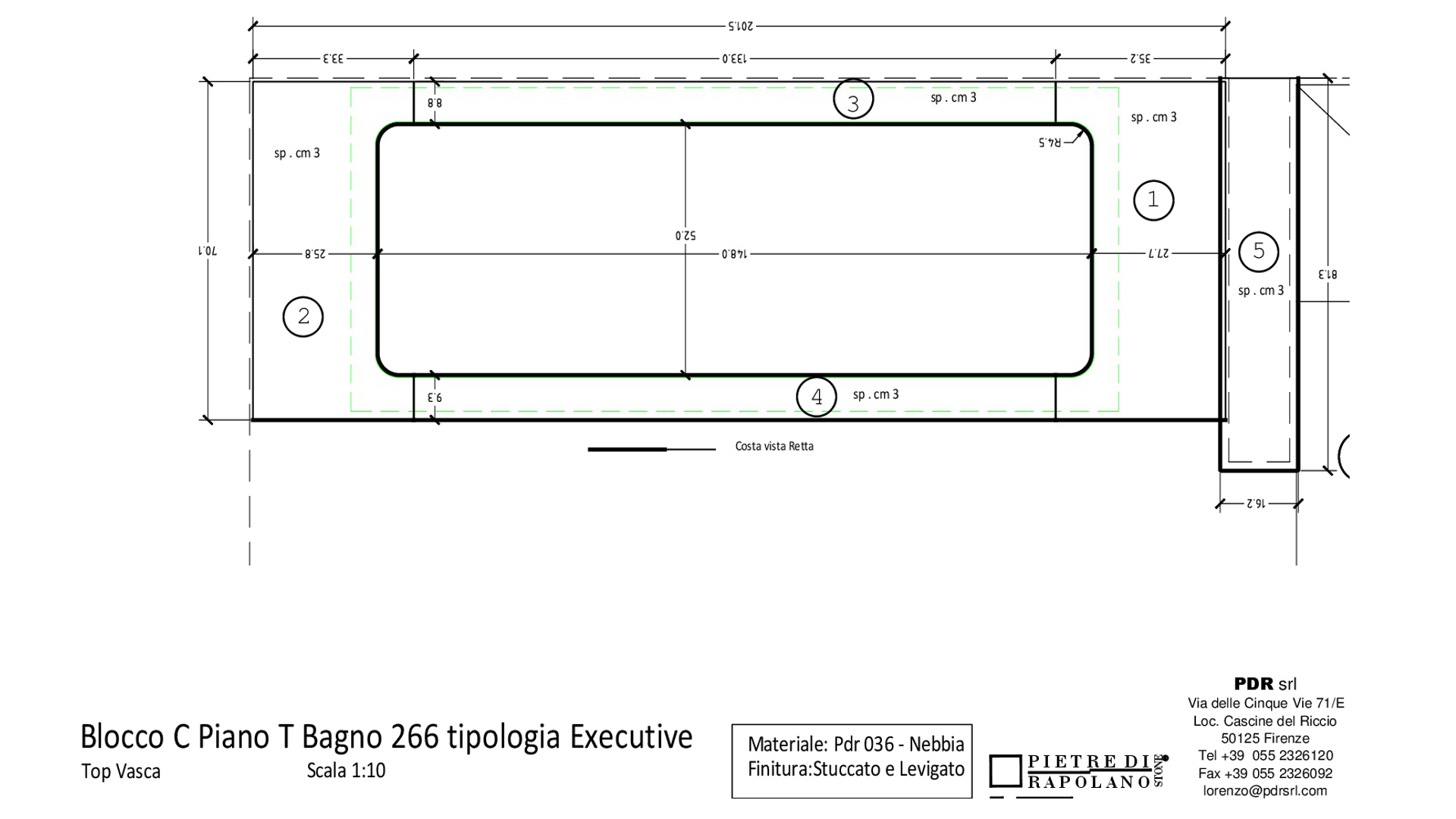
In each bathroom, in addition to the floors and coverings made with 30.5×61 tiles and some special pieces, the shower trays and sink tops were custom-made: in the rooms that required it, bathtub covers were also made.
To allow for quick and fast assembly, without adaptation cuts by the shower tray installers, the various pieces were supplied, cut to size, numbered, and boxed, which constituted the entire shower tray.
A very accurate survey, millimeter-exact executive drawings, and an installation that followed the assembly scheme scrupulously allowed the completion of the work within the established times.