BLOG
Pietra Serena and its use in historic Tuscan architecture
Pietra Serena, along with Pietra Forte, is the historic Florentine stone; for the construction of a city, as was always the case in the past, locally sourced stone was necessarily used.
Pietra Forte
The difficulties of transporting goods, particularly building stones, almost mandated the use of stones available in the immediate vicinity and in Florence, there were quarries of Pietra Forte practically in the city. In Maiano, at Cascine del Riccio, along the Faentina road; it was the stone immediately available, used for both prestigious palaces and all finishing works, such as stairs, windowsills, edges, and facings.
Our city is made of this wonderful stone, from Palazzo Pitti to Palazzo Vecchio, passing through countless other creations.
Until a few years ago, Pietra Forte was still being used: architect Michelucci chose it for the Santa Maria Novella Station, a remarkable example of modern architecture; the headquarters of La Nazione, the CTO hospital in Careggi, and a thousand other creations around the city are products of this material.
The serene sister
The other “historic” Florentine stone, used for its easy local availability, is Pietra Serena. The quarries are a bit further away, located in Fiorenzuola, about fifty kilometers from Florence, Pietra Serena is gray, compact, very suitable for decorative and finishing uses, it also finds wide use in local building production, but it is with the Renaissance that it assumes true cultural significance.
Filippo Brunelleschi chose it, in combination with white plaster, for the decoration of his architectures: columns, pilasters, cornices, and stringcourses stand out against the white plaster surface.
The Pazzi Chapel, within the complex of the church of San Lorenzo, is an incredible example of this architectural style.
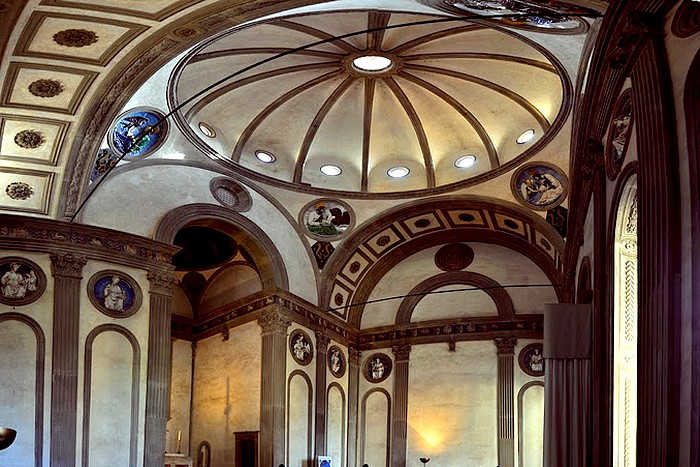
Pietra Serena has been widely used since the 1400s up to the present day, andits chromatic uniformity makes it highly used in contemporary minimalist architectures: smooth surfaces, pure volumes, chromatic contrasts, which keep intact Brunelleschi’s lesson of the play of contrasts. To give a notable example, the Apple Store in New York takes this contrast to the extreme: the gray of Pietra Serena “contrasts” with an absolute white, the white understood as absence, which here is pure transparency represented by crystal.
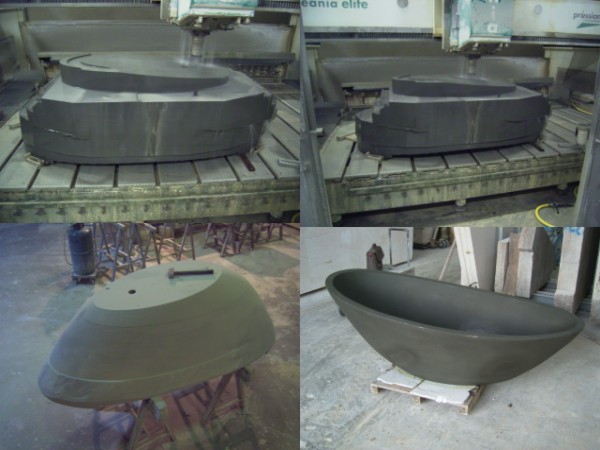
With modern technologies, the expressive potential of Pietra Serena has further increased: it is indeed possible to create, in addition to stairs, windowsills, floors, any other artifact, such as a bathtub carved from a block of Pietra Serena, of our creation.