BLOG
Living Room 2026. Design that embraces nature, fluid forms, and imperfections
The year 2026, for the living room, is shaping up to be a return to essence: a design that does not flaunt, but welcomes; after seasons of extreme minimalism and bold colors, a new phase opens, more intimate and sensory. Forms, materials, and lights interact to create environments that stimulate all the senses, balancing comfort and imperfect beauty.
The living room, the beating heart of the contemporary home, becomes a living space, capable of adapting to daily needs; here, craftsmanship, natural inspirations, and an aesthetic that favors the human gesture, imperfect but full of character, intertwine. Among the many languages emerging on social media and in industry magazines, three directions seem to outline the future of living in 2026.
Soft geometry
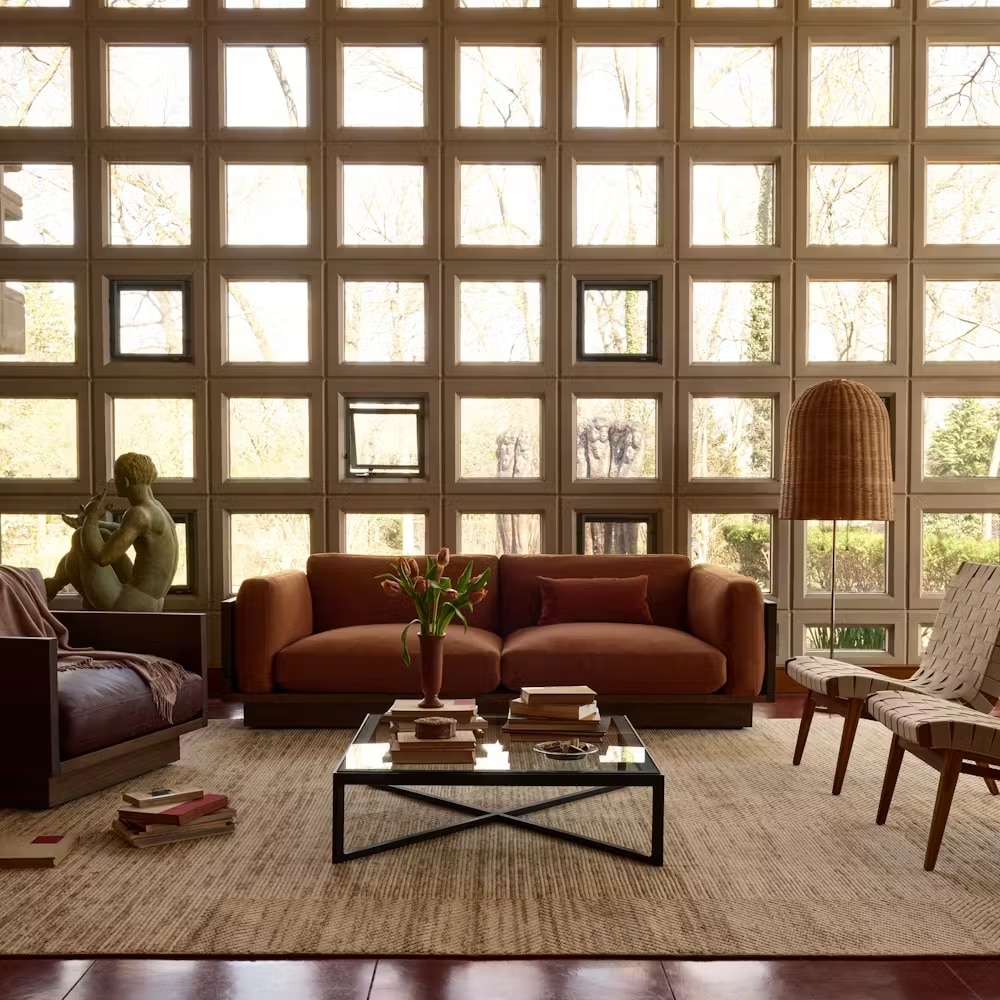
Farewell to rigid lines and static volumes for the living room in 2026: the new formal lexicon speaks a more fluid and tactile language. Soft geometry reinterprets the structure of furniture with gentle curves and more human proportions: a sofa that curves softly, a hand-shaped coffee table… each element contributes to creating a more natural, almost living domestic landscape, and this trend is not just aesthetic but sensory. The materials — polished stone, curved wood, bouclé fabrics, or compact velvet — offer a tactile sensation that recalls the artisan’s touch. Soft geometry is a statement against the coldness of serial design: an invitation to touch, to feel, to slow down.
Living in green
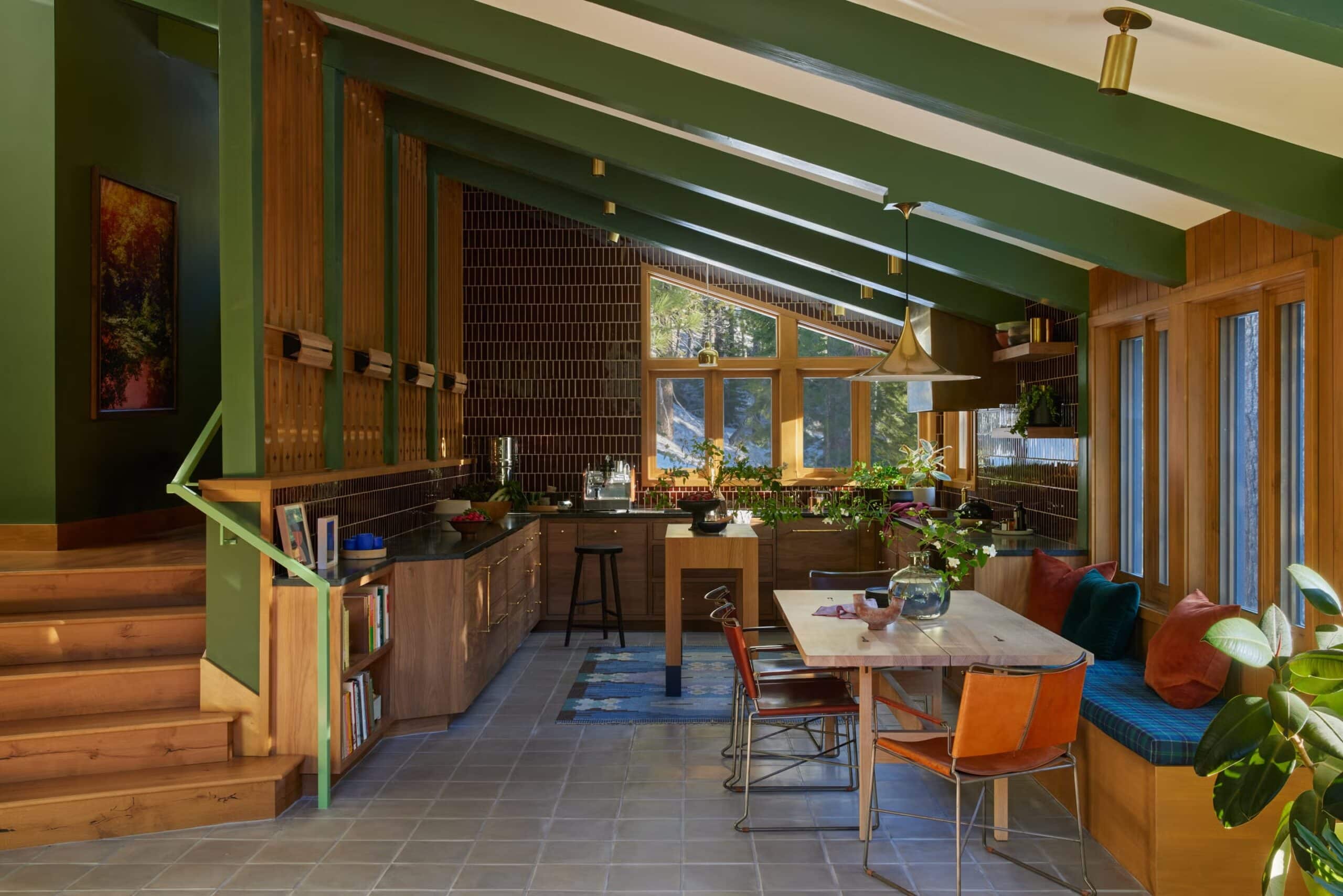
The boundary between inside and outside will continue to dissolve in 2026. Living in green means bringing not only plants into the home but the entire breath of nature: living rooms transform into inhabitable gardens, where foliage modulates light and the arrangement becomes an integral part of the architecture.
Color palettes are inspired by the landscape: from sage green to moss, from clay color to sandy neutrals, and surfaces evoke living materials like pietra serena, lime, and brushed wood, capable of changing with light and time. Sustainability is no longer just a choice: every material tells its origin and invites a new kind of luxury, the silent luxury of naturalness.
Embrace imperfection
In the living room of 2026, perfection gives way to authenticity. Embracing imperfection means celebrating the mark of time, the human gesture, the natural variation; it is a principle inspired by aesthetics like Wabi Sabi, but reinterpreted in a contemporary, more sober and material way.
Marked surfaces, irregular glazes, visible seams, prominent wood grains: these are all elements that tell the life of objects. Error becomes decoration, dissonance harmony.
These three languages – the fluidity of forms, continuity with nature, and imperfect beauty – map out a precise vision of the interior design to come. A design where every material has a sound, every color an emotion, every detail a moment.
- Tactile and fluid forms: soft geometry creates more human and welcoming spaces.
-
Connection with nature: living materials and plant colors bring home and landscape closer.
-
Imperfection as value: the uniqueness of surfaces tells the story of those who inhabit the space.
In 2026, the living room will no longer be just a place to live, but to feel: an environment where comfort meets the poetry of matter and the truth of things made with care.
Photo credits: dwr.com / elledecor.com