BLOG
Inspection at the Tivoli Quarries
Pietre di Rapolano has always been dedicated to selecting stone and travertine. Our color selections are the result of research and attention to market needs. We have always carefully sought the most suitable materials for our clients’ projects.
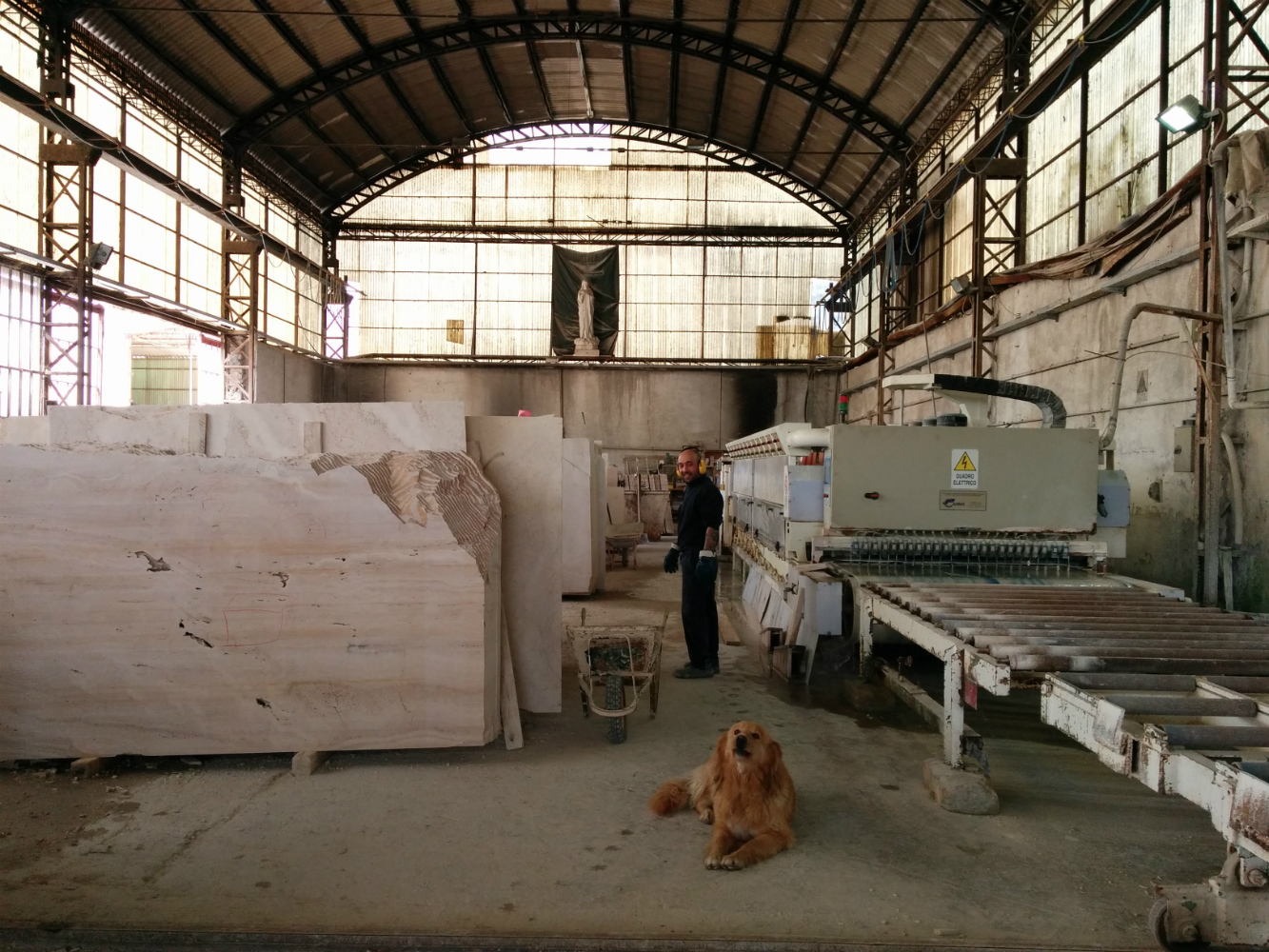
Natural stone is inherently varied, and within the same block, different color shades can be found.
For special and particularly significant projects, we conduct site visits to the quarry to supervise the extraction and selection of pieces.
This time we went to Tivoli, famous for what the Romans in Latin called “lapis Tiburtinus” (stone of Tibur, that is, Tivoli), which is the travertine originating in these areas.
A stone that originates from calcium carbonate deposited in stratified formations, porous and light. Initially, this material was used for foundations and some parts as a substitute for tuff. Later, starting from the Augustan era, it was considered a “noble” material used in important works such as the Theatre of Marcellus or the urban gate on the Esquiline.
Travertine was also widely used in the Baroque era, for example, in the Basilicas of St. Peter, St. Andrew della Valle, St. Mary Major, and St. John Lateran.
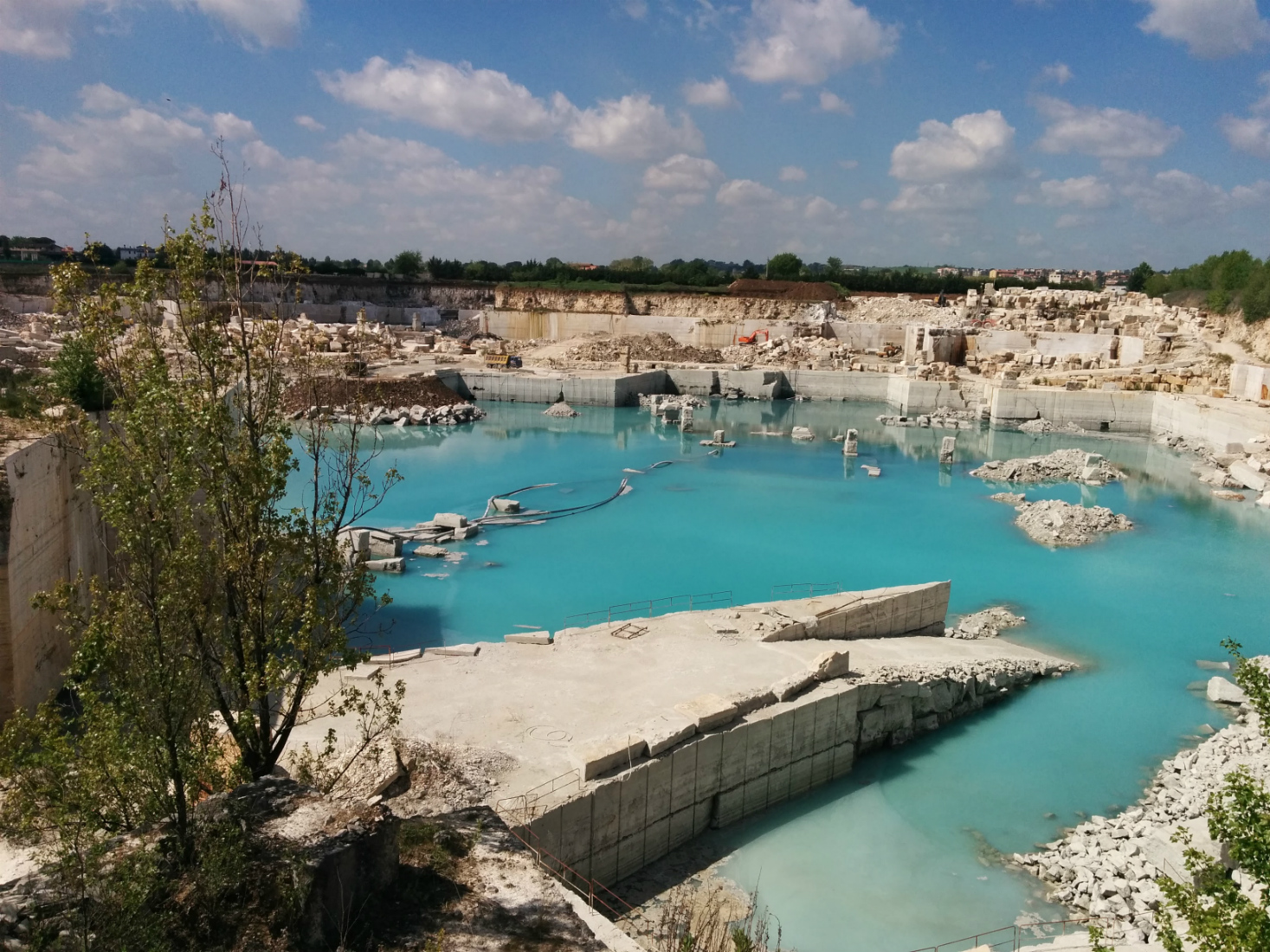
In the area, a production chain has been established that transforms blocks into slabs destined for various uses and applications.
All stages of stone processing are carried out, from sawing to turning, from milling to polishing, within dedicated workshops.