BLOG
How to create a travertine mosaic
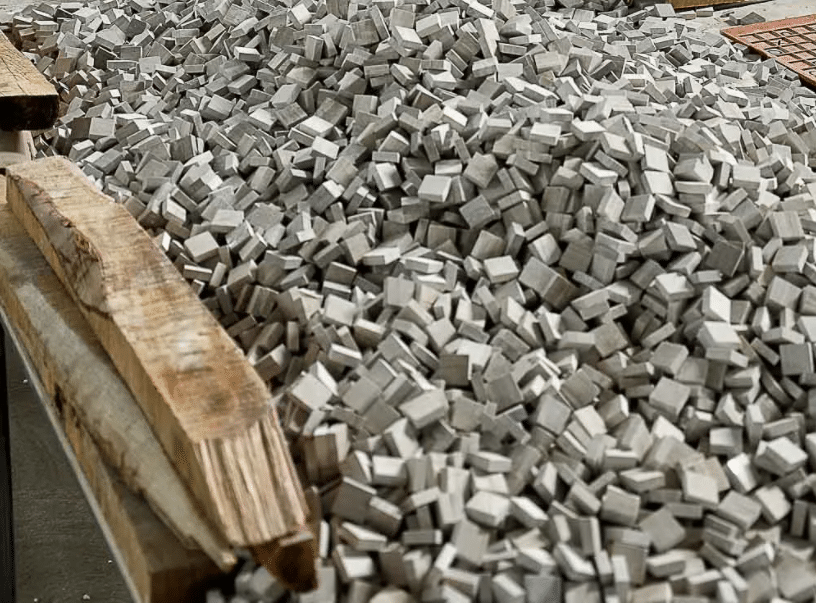
Rapolano stone mosaics are made by cutting broken tiles during production into smaller pieces of various shapes and sizes.
This process prevents the raw material—travertine—formed over geological timescales, from becoming waste, which would increase environmental disposal costs.
In fact, when reused in this way, it increases in value, enriching and decorating spaces paved and clad with Pietre di Rapolano tiles.
The first step in this material reuse process was the design of mosaics, with pieces shaped to create a pleasing appearance through composition and repetition. This led to all the forms available today in Pietre di Rapolano mosaics.
Designers and architects have explored various geometric compositions and color combinations, a process still ongoing as new collections are continually added.
The first phase of the production process involves the cutting of pieces to the required sizes.
Afterward, the pieces are manually placed into special molds made of plastic material that replicate the pattern of the finished product, ensuring the back of the material remains visible.
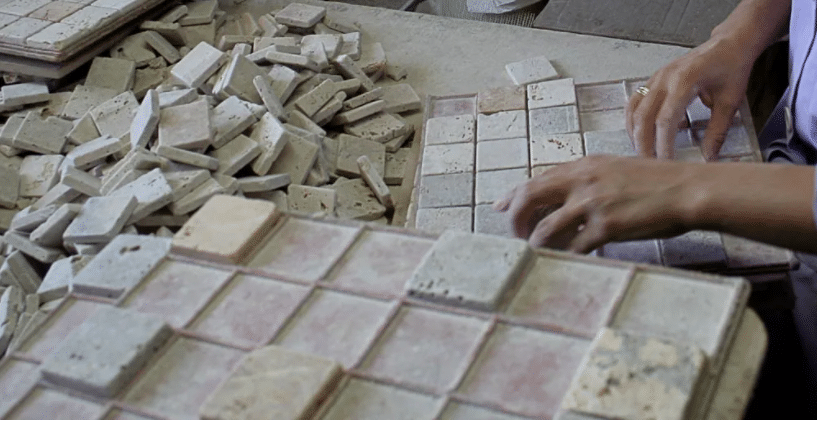
At this point, a plastic mesh is glued onto this surface, and the sheets are left to dry. Once the process is complete, the plastic mold is removed, and the sheets are ready to be packed for sale.
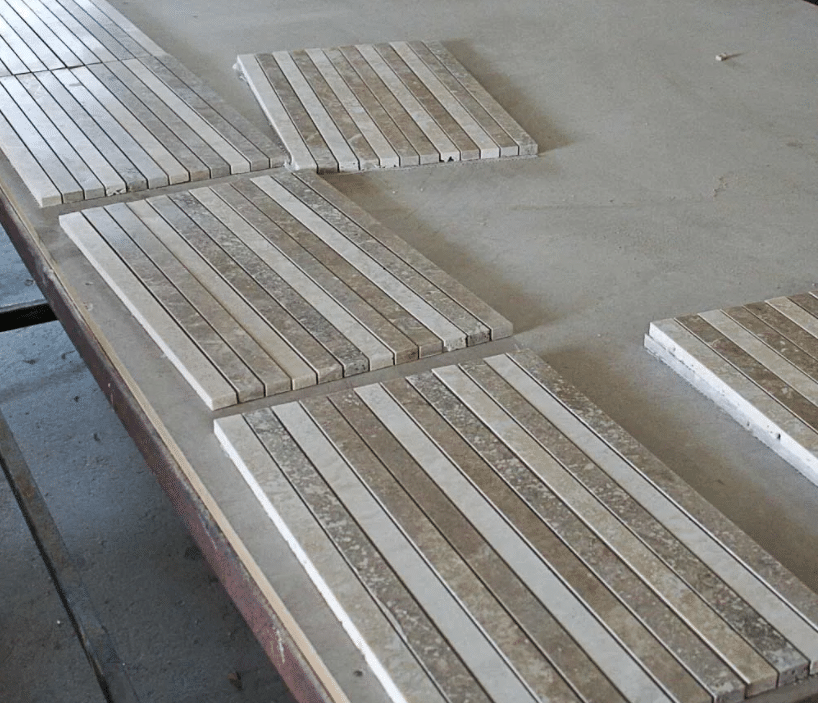
Further consideration should be given to the color selections of Pietre di Rapolano mosaics.
As we have seen, stone mosaics originate from broken tiles available in many colors.
Theoretically, it would have been possible to make all mosaics in all colors of the Pietre di Rapolano selections; however, the aim was also to contain the final costs of this product, allowing the use of mosaics by a broad market segment.
Therefore, the decision not to select the colors of the pieces seemed most appropriate, also supported by a precise design consideration: one of the characteristics of the stone is its marked color variability. It seemed appropriate that the mosaics should be a representative sample of the color variations of Tuscan travertine.
The colors, even if a mix of all ours, could only look great together, as they all come from the same quarry.
In the history of architecture and art, mosaic-finished environments have always been the most precious and valuable. In the past, due to abundant low-cost labor, it was feasible to create mosaic environments by assembling individual pieces, one after the other, directly on site.
Today, this would be unthinkable, as it would be too expensive.
The use of preformed mosaics, consisting of sheets about 30×30, has facilitated installation, making it economically feasible.