BLOG
How is travertine formed? Its use throughout history
Travertine is a chemical limestone sedimentary rock. The limestone stratifications, along with various oxide intrusions, can take on various colors and different shades.
Travertine is compact, has low absorption, is durable, and is not frost-prone. It is very suitable for both indoor and outdoor use.
It is available in various colors and shades due to the present oxidations.
These shades and colors make it very attractive, warm yet still uniform, and therefore very pleasant and rich.
Even today, despite its millennia-old use, with the first uses dating back to the ancient Romans from the 1st millennium BC, its availability is still excellent.
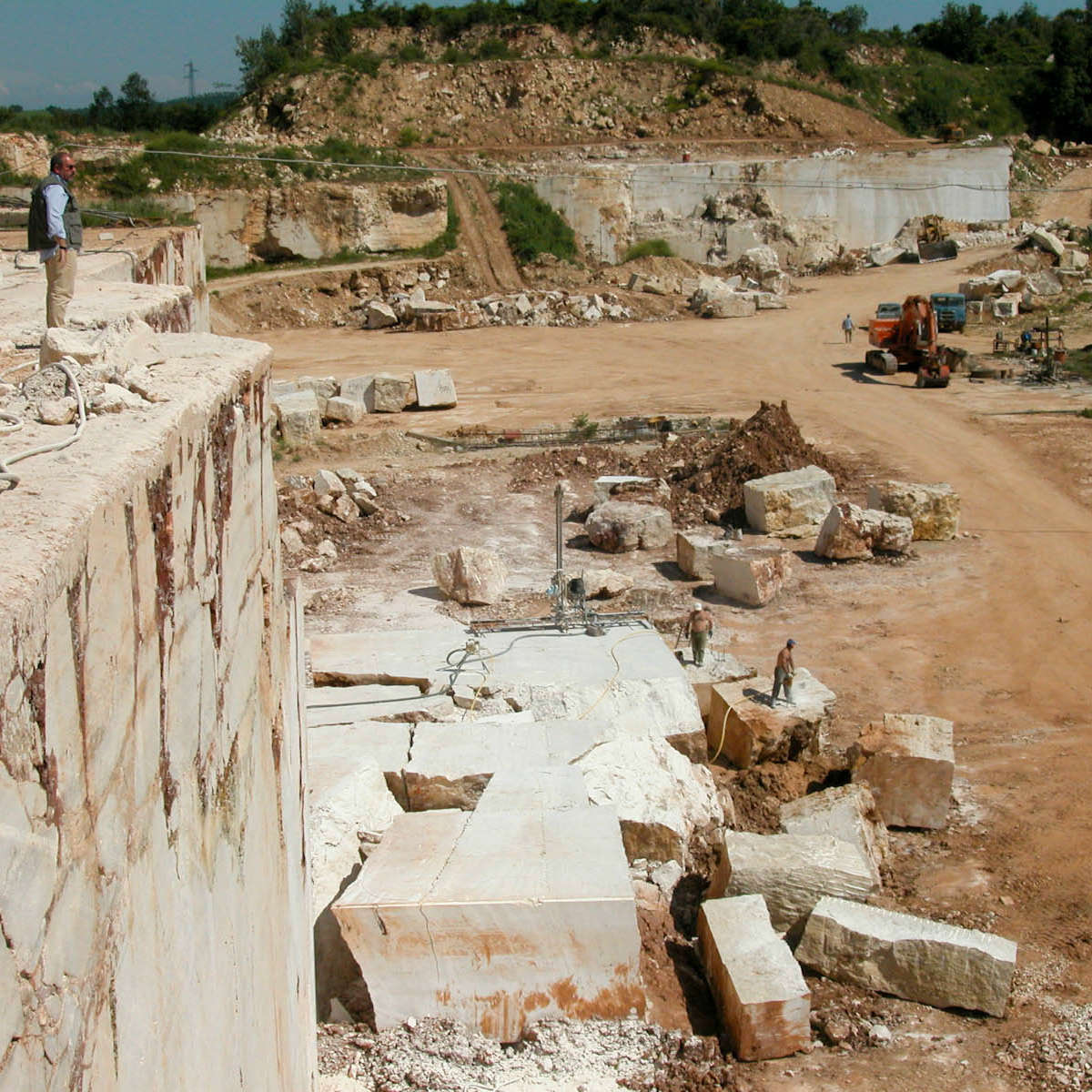
In Italy, there are 4 primary areas for the extraction of this stone:
- Tivoli (Rome)
- Ascoli Piceno
- Saturnia (GR)
- Rapolano (SI)
Quality and use of travertine
One of the most distinctive features of travertine is its typically “aged” and rustic appearance, which makes it the perfect stone if you want to recreate this romantic and timeless atmosphere in your home. Being a porous stone, travertine tiles are offered in two variants: filled and unfilled. Filled ones are smoother, more durable, and have a more modern appearance compared to naturally porous ones.
The finish of the tile is also important as it highlights one or another quality of this excellent material. Usually, there are four types of finishes applied to travertine – honed, polished, brushed, and tumbled. Polished travertine is shiny, very smooth; it reflects light in an amazing way… sometimes it is even mistaken for marble with this finish.
Honed travertine, on the other hand, is the preferred option for both floor and countertop tiles. The surface is still glossy but at the same time left matte and not slippery at all; this type of finish is closer to the natural appearance of the stone.
Tumbled and brushed travertine are very similar. Tiles with such a finish have soft colors, almost do not reflect light, and have a characteristic aged and antique appearance.
Since ancient times, travertine has been used as a material for many amphitheaters, aqueducts, baths, and much more. An excellent example of the longevity of this stone is the Colosseum, the largest building made almost entirely of travertine.
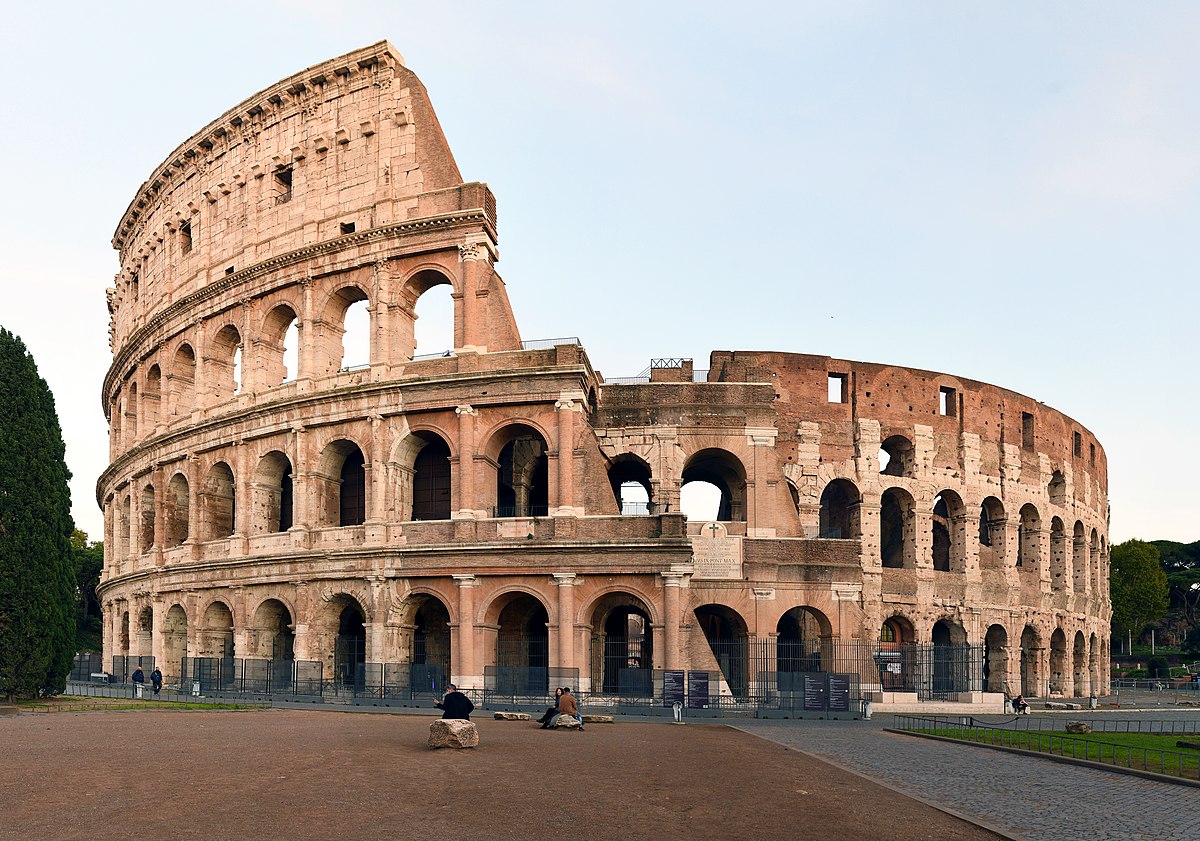
Other famous buildings and structures include the Colonnade of St. Peter’s Square in Rome, Piazza del Campidoglio also in the eternal city, and many Gothic buildings in Siena, just to name a few in Italy. In modern history, travertine has also been used for the construction and outer layer of famous buildings, for example, the Shell-Haus in Berlin and the Getty Center in Los Angeles.