When you stop chasing artificial brightness and start working on the quality of the atmosphere, dark apartments often become the most welcoming; spaces to inhabit slowly, capable of offering comfort, intimacy, and a sense of discreet luxury that withstands time.
BLOG
Dark apartments; solutions to maximize limited light
A dark apartment, when approached with the right tools, can reveal itself like a perfectly aged wine: seemingly introverted, yet capable of expressing surprising depth and complexity. Naturally dimly lit spaces do not demand to be “corrected” at all costs, but rather interpreted, and it is precisely in the shadow that interior design finds fertile ground to create enveloping, layered, and intensely expressive environments.
In recent years, interior design has re-evaluated the dark aesthetic, recognizing its value beyond mere trend. Apartments with limited light invite a different, more conscious approach, consisting of deep colors, tactile materials, and atmospheric lighting. The result is not a gloomy or compromised space, but a home that welcomes, protects, and conveys character.
The key lies in working with the intrinsic qualities of the space, not against them. Walls in charcoal, graphite, or espresso tones, especially if matte, selectively absorb light and create a sense of depth that can even make spaces appear larger; in contrast, light and well-calibrated elements — a cream rug, a sculptural white lamp, a light cushion on a dark velvet sofa — guide the eye and prevent the ensemble from appearing visually heavy.
In the living room, the most successful effect is achieved when creating a true visual refuge. Anthracite or charcoal velvet sofas become the base on which to layer textures: oversized cushions with textured surfaces, throws in caramel or hazelnut tones, soft rugs that break the chromatic intensity.
Warm metals, like brass and satin gold, discreetly reflect artificial light, returning soft glows that warm the atmosphere.
Lighting here is a project within the project
A single central light source is not enough. The welcoming effect arises from the sum of light points at different heights: floor lamps, wall sconces, table lights, and candles; light thus becomes a narrative element, capable of drawing shadows, enhancing materials, and creating perspective depth. Even a warm filament bulb, if well positioned, can radically change the perception of space.
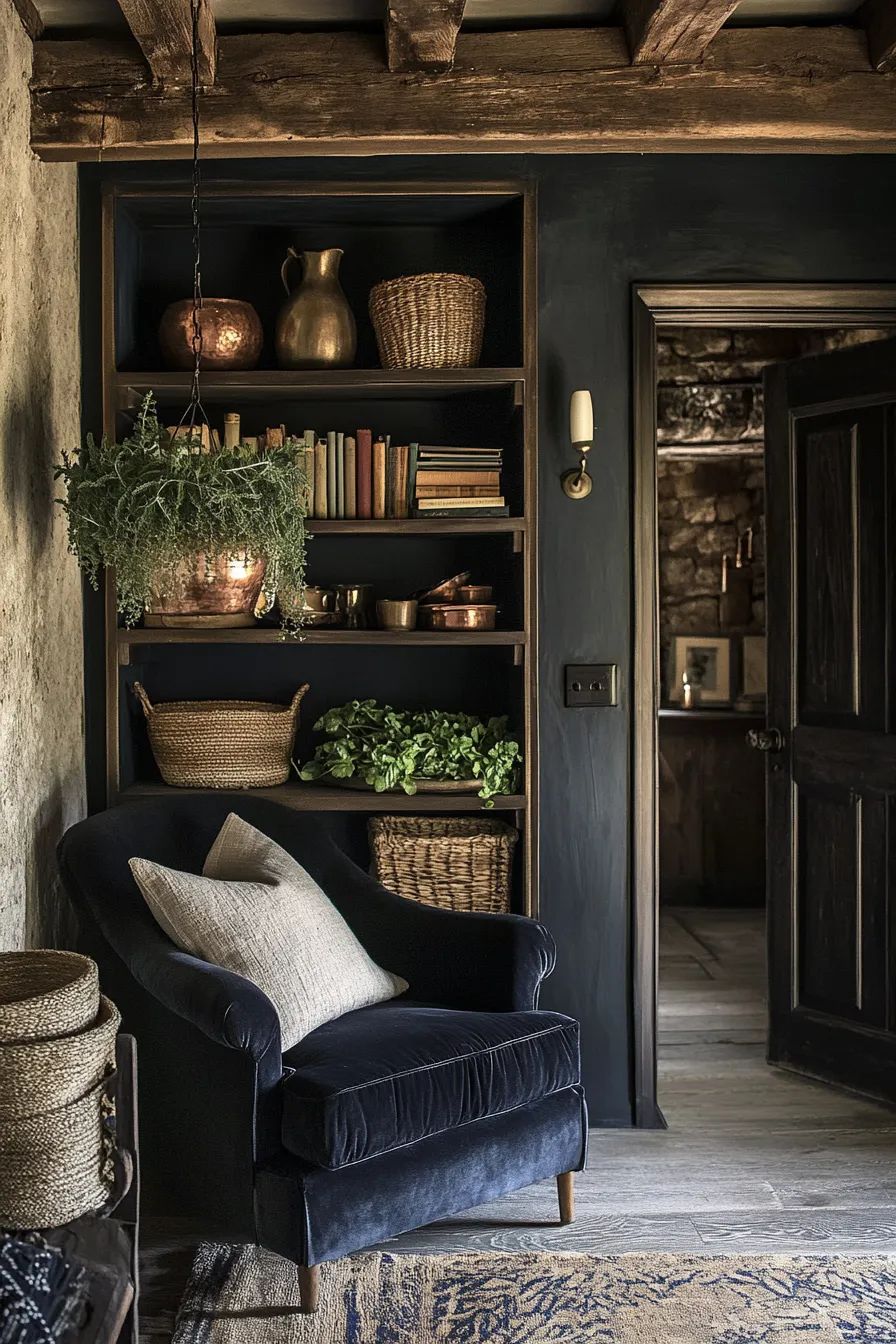
Another fundamental ally: the layering of materials
Reflective surfaces — glass, glazed ceramics, metallic details — interact with absorbing finishes like velvet, linen, or matte walls. This alternation avoids a flat effect and builds visually rich environments, even in the absence of abundant natural light: plants, chosen with broad and dark leaves like the monstera, introduce an organic presence that breaks the monotony and adds vitality.
An often underestimated aspect is that dark colors, if used correctly, can make spaces appear larger. A charcoal accent wall, for example, visually recedes, creating depth: paired with warm wood floors and well-spaced light furnishings, it contributes to a more articulated and less compressed perception of the environment.
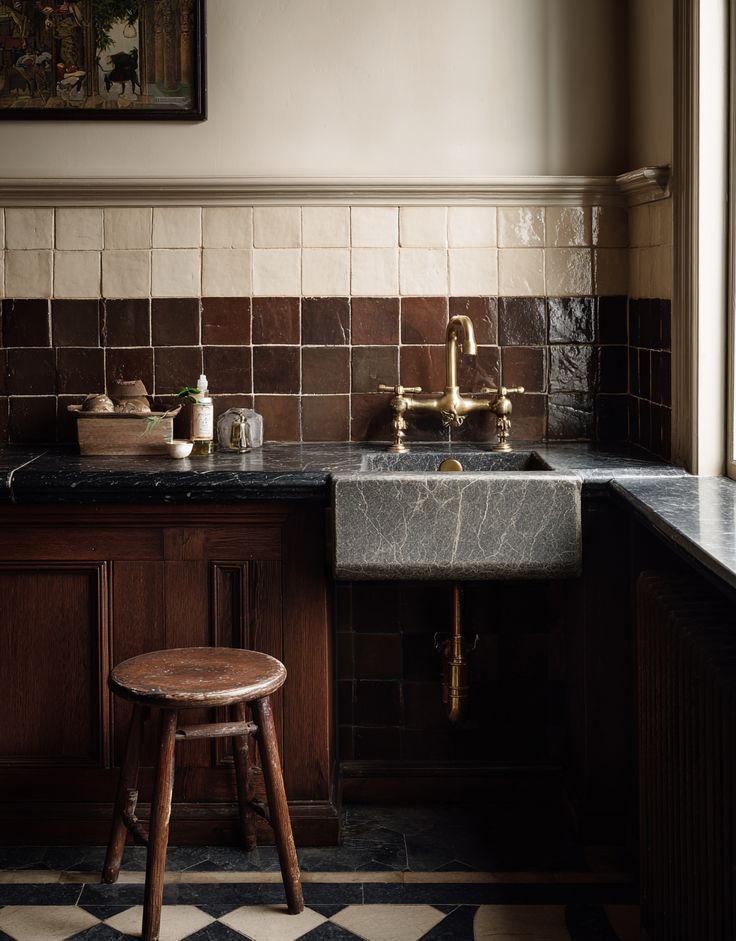
In summary, designing a dark apartment means accepting shadow as an integral part of the space’s language and transforming it into value through targeted choices:
- deep and coherent palettes,
- rich and tactile materials,
- layered and warm lighting,
- studied contrasts between dark surfaces and light accents.
Photo credits: edwardgeorgelondon / Pinterest