BLOG
7 films that every architect should watch at least once
Architecture is the backdrop of cinema. Landscapes, houses, and cities are the settings where filmmakers place people, lives, and emotions, and in some cases, the results of this blend are extraordinary.
We offer you a selection of films where architecture plays a key role in the narrative: we have tried to create a non-trivial top 7, not just for architects, excluding some extraordinary films like Blade Runner, or Wings of Desire or the legendary Metropolis, which remain the cornerstones of the meeting between architecture and cinema.
Dark City (1998)
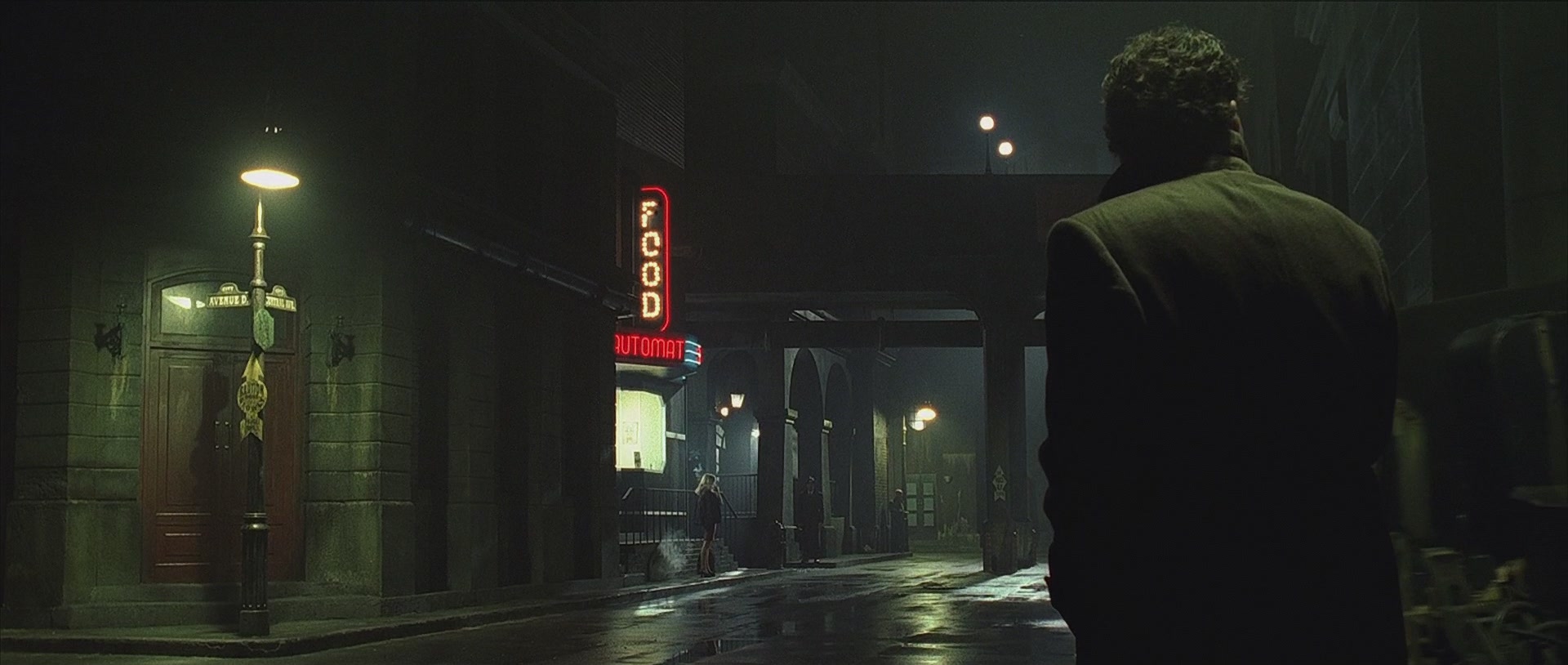
The subjects in this story, which has no temporal or geographical location, move between abandoned museums and hotels, noir-toned police stations, and smoky venues. To these “dusty” interiors, cyclopean sets are alternated, set in motion by grand special effects, which shift every time midnight strikes, deforming and reconstructing the city, giving it a new face.
The Dark Knight (2008)
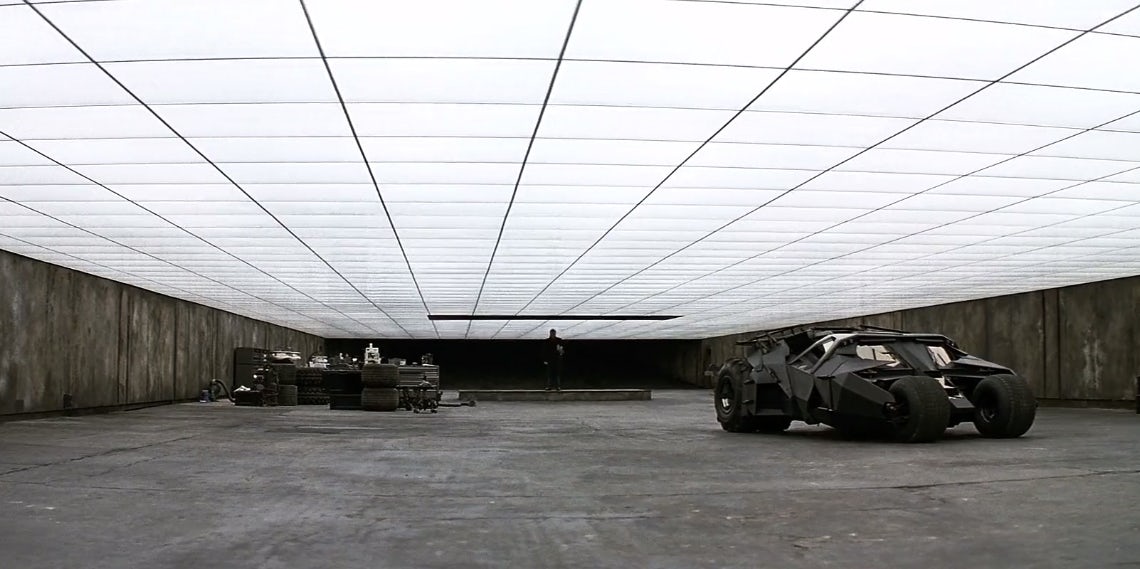
Batman is a colossal figure in pop culture, a superhero with an unmistakable iconography (his bat costume). Although Bruce Wayne (Batman’s real-life secret identity) lives in a sumptuous mansion, the real Bruce Wayne is Batman, and Batman’s true home is the Batcave. Directorially, Tim Burton and then Christopher Nolan have done him a great service: especially the latter, a director with a great interest in the theme of perception – which often expands into the design of his sets, as in the worlds of Inception; he created a Batcave beneath the Wayne Industries shipyard. This vital space takes on the industrial character of its surroundings, although it is more than just a reworked warehouse: it is clean, regular, and covered by a perfect grid. However, it is not just orderly. A menacing darkness looms in the background.
Nolan’s Batcave is considered by many insiders to be the most contemporary project of the last 10 years.
Dogville (2003)
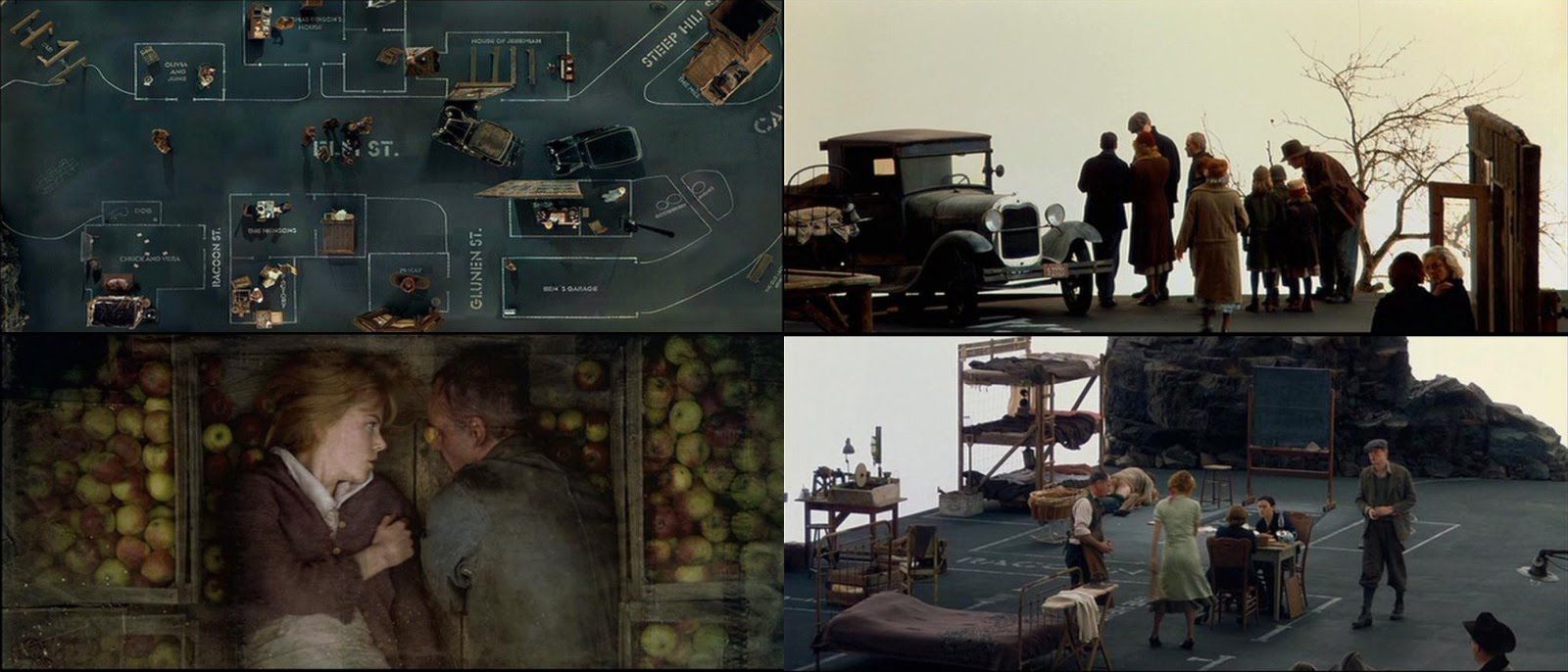
A film shot in such a minimal way that your only point of reference is a floor plan drawn on the ground. A film where you have to imagine all the missing information; this is the way chosen by Danish director Lars von Trier to represent the story of the citizens of an imaginary village: the drama unfolds on a single stage with the various locations simply drawn in chalk.
Old boy (2003)
One day you are kidnapped for no reason. Locked in a room for 15 years without any human contact. Without warning, you are finally drugged and find yourself outdoors. You have only 5 days to discover the reason for everything that happened to you.
Old Boy is a fantastic South Korean film where the mix of colors and the composition of each scene has been carefully prepared, with wall patterns, strong contrasts, and different types of atmosphere. The task of designing a room, where a man must remain imprisoned for fifteen years without apparent reason, is important. That room is the emotional core of the entire story.
It must make an impression.
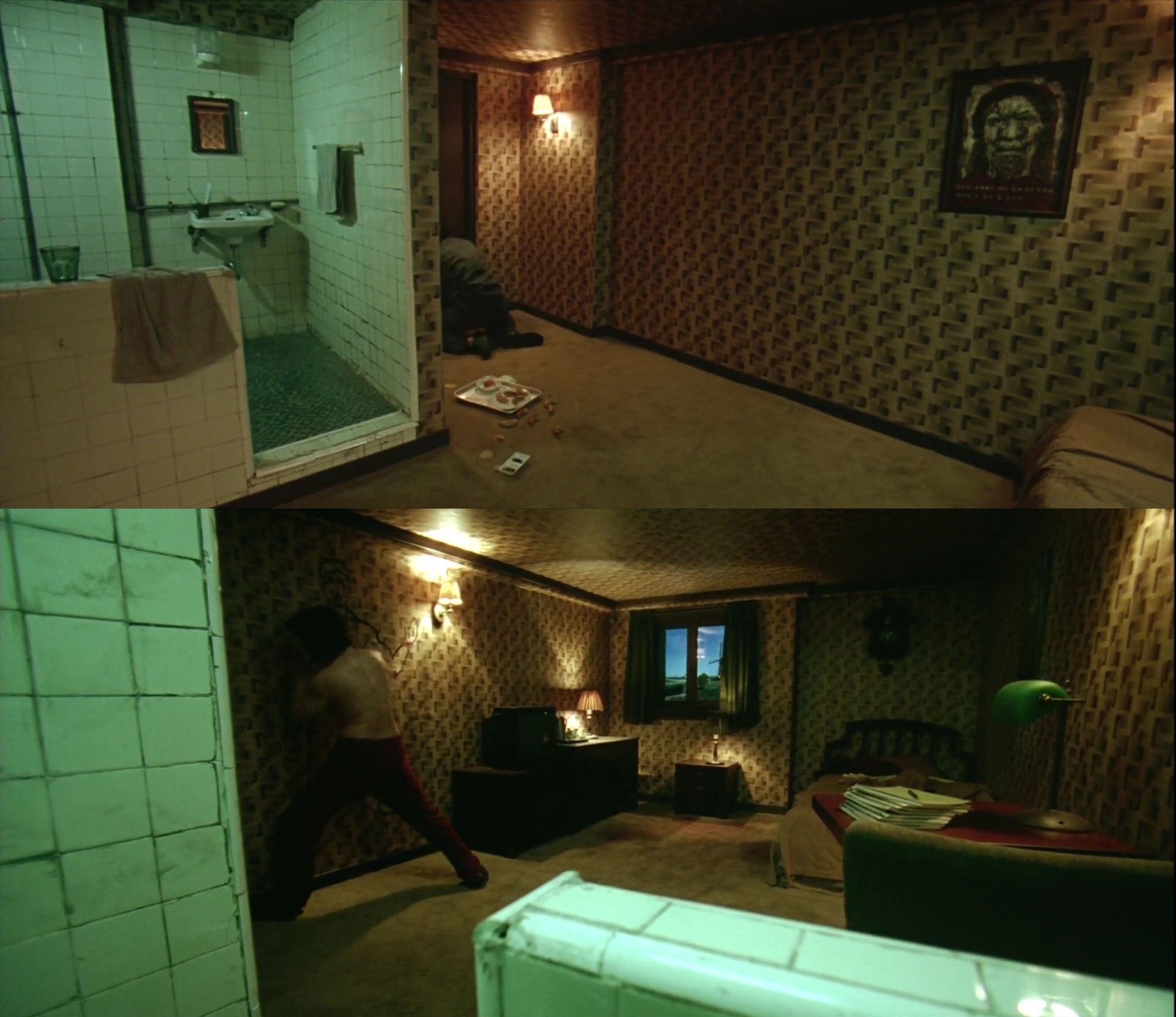
But as unforgettable as that room is, the true masterstroke may be the villain’s apartment in this story: we would love to know what you think.
Gattaca (1997)
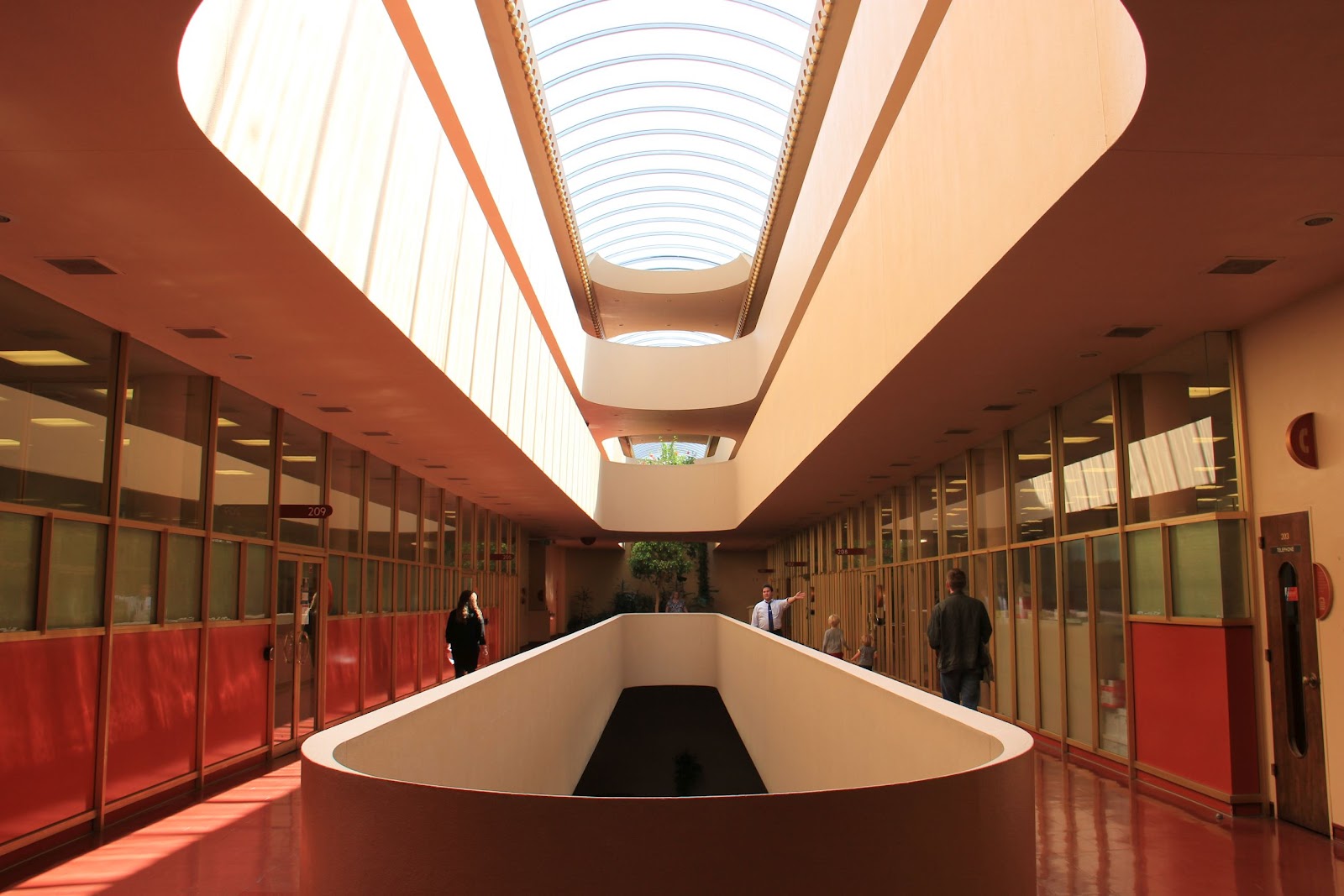
In the future, the world is governed by genetic engineering: humans are divided into Valids (conceived in a test tube with manipulated DNA) and Invalids (born the old-fashioned way), considered the lowest rung of society. To become an astronaut, an Invalid assumes the identity of a Valid and, after various adventures, departs for Titan. Perhaps Gattaca may not be considered a masterpiece in the absolute sense, but if you ever find yourself at the Marin County Civic Center, designed by Frank Lloyd Wright, you will find yourself in its imaginative world since this film was partially shot inside it.
For this “small” detail alone, we highly recommend watching this film.
Psycho (1960)
In Alfred Hitchcock’s films, as observed by French director Jean-Luc Godard, the plot is not dictated by the story, but by the images: the open hand reaching for the door or a fall down the stairs are examples. These fragments give Hitchcock’s films their eerie charm, imprinting themselves on the viewer’s mind; the master also said that “an art director must have a vast knowledge and understanding of architecture” and this statement is reflected in all his films.
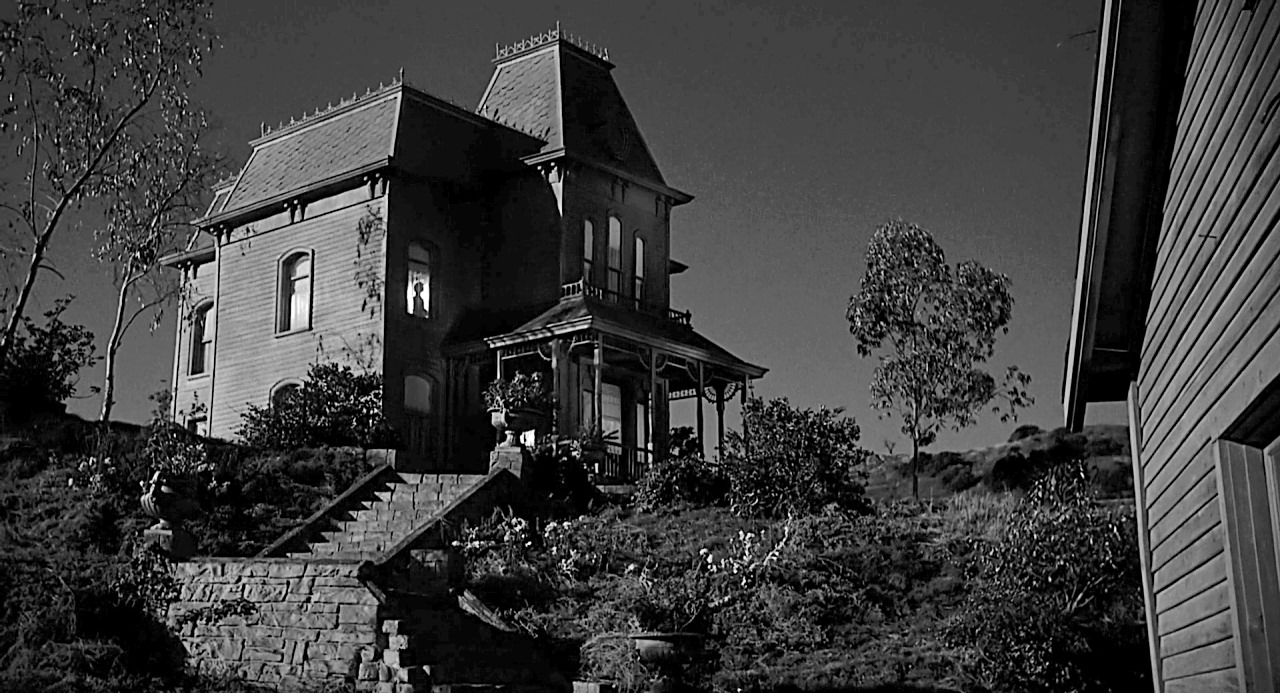
Among these, Psycho stands out where the composition of the sets physically embodies the distorted personality of Norman Bates in a way that is not immediately evident, but gradually becomes clear: the imposing, yet decaying, house on the hill is opposed to the straight-line geometry of the motel.
The Warriors (1979)
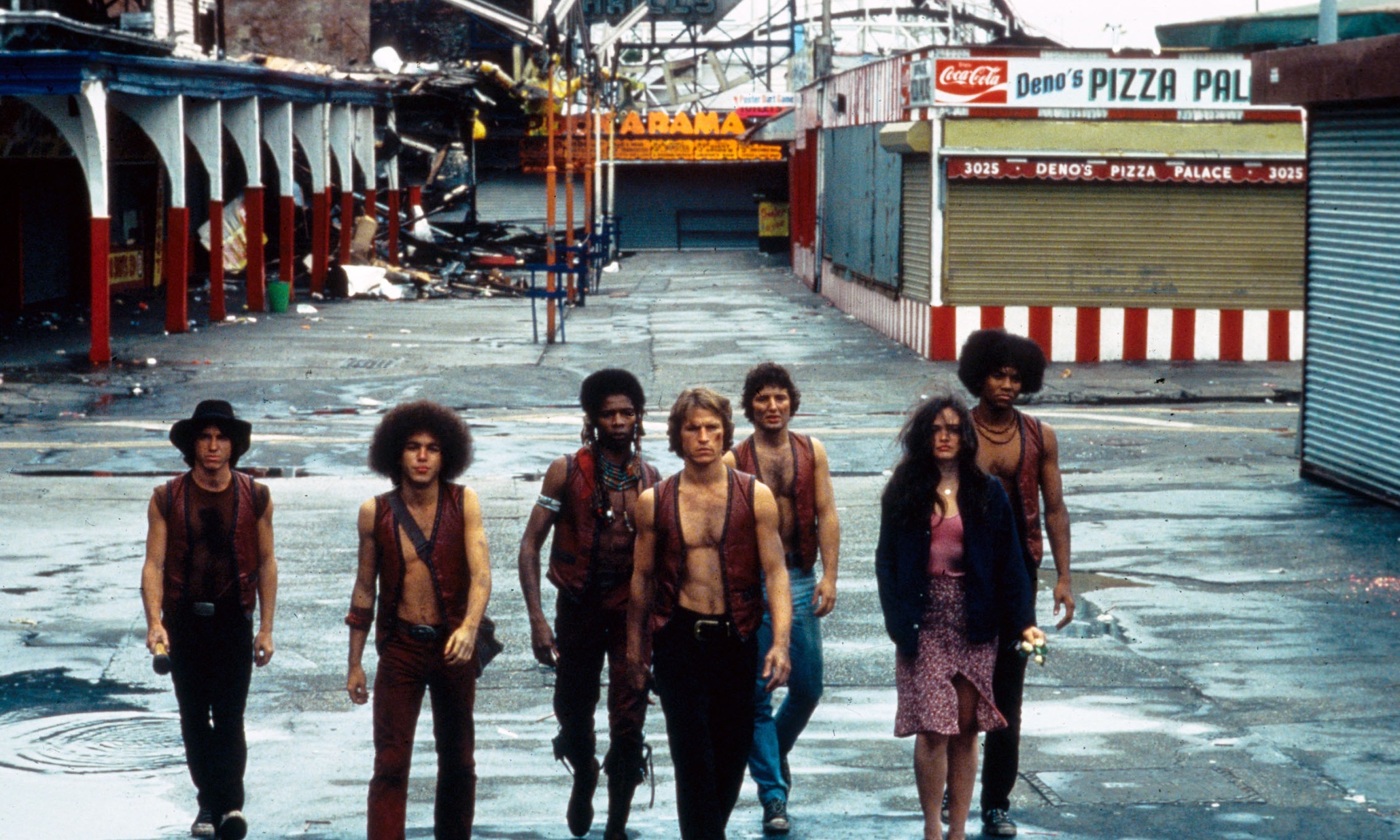
After an exhausting night of running and fighting, the surviving members of the Warriors return home to Coney Island: its amusement park and beach are a staple of New York City. It is here that the Warriors finally confront the Rogues, and it is here that Luther delivers the famous line to cinematic history: “Warriors, come out to play?“.
The skyline of Coney Island has entered the imagination thanks to the Ferris wheel and roller coaster, and some of the oldest buildings are still visible today: it is no coincidence that a chapter of Delirious New York, a book by Rem Koolhaas the greatest historian of contemporary architecture, is dedicated to it.
What do you think of this list? Would you like to add any films?
All we can do is wish you a good viewing!